Blog

  • The Teen Gambling Crisis!

    The Teen Gambling Crisis!

    What do Tom Brady, Kendall Jenner, LeBron James, Kevin Hart, Jamie Foxx, Wayne Gretzky, Jon Hamm, Vanessa Hudgens, Vince Vaughn, Neil Patrick Harris, Kevin Garnett, Jerry Ferrara, Ryan Seacrest, Conor McGregor, and Neymar Jr. have in common?

    1. They are famous and successful,
    2. They are considered cool,
    3. Kids look up to them and model their behavior, and
    4. They have ALL pitched versions of online gambling, which is hurting our youth!

    Now that we are past the Super Bowl, where over 67 million Americans wagered roughly $1.76 billion on the game, it’s time to address a crisis nobody seems to want to admit or talk about!!!  Teenage Gambling!!

    Children pay attention to everything that goes on, including betting on the Super Bowl by parents, friends, and older siblings!  In my opinion, what has fueled this problem is ‘Proposition Betting” and “Prediction Markets!”

    Now, casual fans can wager on the big game without having to know anything about the game.  They can bet the coin toss and what color of Gatorade will be used to douse the winning coach, as is tradition.  There were over 500 prop bets available to the public during the Super Bowl.

    These “Prop Bets” cater to those with short attention spans, and with “Prop Bets,” every play can seem like a mini lottery ticket!  There seem to be bets available every few minutes.   What started as a sideshow is now the main event!

    Back in the day, gambling was mostly confined to brick-and-mortar casinos, local bookies or Off-Track Betting parlors for horse racing wagering!  It was very difficult for underage teens to place a bet, let alone develop a gambling problem. 

    Recently, I was at a St. John’s game at Madison Square Garden, and there were four teenage boys (with no parents) roughly in the 13-16 age range sitting two seats away from me.    While my vision needs correction, my hearing has never been better.  Although they were St. John’s fans, they were fixated on Butler’s #11 Finley Bizjack, whom they NEEDED to score at least 14 points.  I asked if Bizjack was their favorite player, and the response was, “No, we have him in a 3-player parlay bet!” 

    Some disturbing “Teen Gambling” facts and statistics from www.Mass.com, the Massachusetts state website:

    1. Gambling is illegal for Americans under the age of 18.
    2. Gambling disorders can begin in children as young as 10 years old.
    3. Problem gambling impacts youths from 4x-8x compared to adults.
    4. By the time they get to high school, 60-80% of students reported that they gambled at least once in the past 12 months.
    5. 36% of adolescent boys (ages 11-17) reported gambling in the past year.
    6. Teens who illegally gamble are more likely to use illegal drugs.
    7. Among ALL addictions, gambling is linked to the highest suicide rate.
    8. Research shows that the children who are introduced to “harmless betting” by age 12 are 4 times more likely to engage in problem gambling later in life.
    9. Gaming.net surveyed 16-year-old boys, and 51% of them reported gambling on sports.

    How did this all start?  As legal gambling becomes more common in our society, youngsters are exposed to gambling at an earlier age!  Examples include playing fantasy football, scratching off lottery tickets, and watching or joining adult poker games.  Other types of gambling include playing online video games and even “casino-like” activities like roulette and slot machines, as gambling has been linked to gaming!  90% of teens say they play video games online!

    Since the dramatic shift from gambling in brick-and-mortar betting parlors to the digital world of betting on smartphones, barriers of entry have been removed for our youth to make it easier than ever to access gambling platforms!   Tech-savvy kids now can easily set up fake accounts, change their date of birth and proceed to gamble freely on their smartphones! 

    Unfortunately, what has happened is that the skyrocketing of gambling has outpaced regulatory frameworks designed to protect vulnerable parts of the population, especially minors! 

    As a society, America is way behind the gambling curve in many facets. TV and radio gambling advertising restrictions don’t exist.

    This is a CRUCIAL time to check in with your kids and those you care about!  Ask them who they know has a smartphone gambling problem!  Odds are high that they will know at least 1 person who is in trouble and can reach out!

    Age-verification platforms and parental guidance resources need to be ramped up immediately!
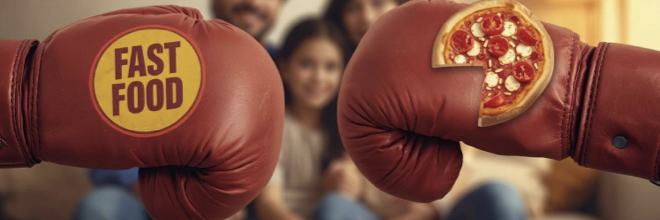
  • Pizza Wars: Pizzerias vs Fast Food!

    Pizza Wars: Pizzerias vs Fast Food!

    For decades, pizza has been a staple of American cuisine.  It fed families on Friday nights, enhanced office lunches, and was served at many children’s birthday parties!

    In 2023, I wrote a column called “A Slice of Queens” for the Queens Chamber of Commerce’s “This is Queensborough Magazine,” called “Pizza Wars.”   Pizza Wars have been around for decades, mostly versus each other!

    At that time, there was a lawsuit between:

    1.  Bellucci’s Pizza vs Andrew Bellucci’s Pizza, which are only six blocks away from each other on 30th Avenue in Astoria, Queens. 

    2.  In the mid-1990s, it was Ray’s vs Original Ray’s vs Famous Ray’s. 

    3.  Patsy’s vs Patsy Grimaldi’s, which evolved into Grimaldi’s vs Julianna’s.

    On occasion, pizza wars have led to violence, especially with the alleged thefts of sauce/gravy “secret” recipe formulae over the years.  The 2011 beating of Louis Lombardo, owner of “The Square” in Staten Island, and allegedly beaten for stealing the L&B Spumoni Gardens sauce recipe, comes to mind amongst other incidents.

    Back in the day, pizza was inexpensive, filling, and a sure hit with kids of all ages!  For many years, a regular NY-style ‘grab and go’ slice cost the same as a “New York City subway token.”  Then the ‘artisanal pizza boom’ kicked in along with what I call “Pizzaflation”, starting before and during the Covid-19 era through today!

    In my opinion, Pizzaflation is when the costs of key ingredients increase much faster than inflation!  For example, the cost of quality flour went up almost 6.6% per year vs 3.2% inflation from 2020-2025.   Inflation pummeled pizzeria owners from all sides, as cheese prices, wheat, rent, utilities, insurance, and increasing minimum wages have all surged simultaneously. 

    Pizzeria owners didn’t want to drastically raise prices; however, in most cases, they had to increase prices to remain profitable!!  I know the average consumer cares little about the “business model plight” that pizzeria owners are currently enduring, as they are more concerned about the rising costs of their family meal. 

    The new Pizza Wars are now with fast food!   Pizza no longer becomes the “middle ground” between eating at home and going out to dinner. 

    Think about the best pizzeria in your neighborhood.  In Manhattan and the other 4 boroughs, a round pie or a square pie can cost anywhere from $25, $30, or even $40 at some places.  Even large chains have raised their prices, and I don’t know if there are any “$1 slice spots remaining?  Think about a $30 pie, plus delivery charges, service fees, suggested tip, or driver gratuity, and pricing can get out of control. 

    For budget-conscious families, pizza is no longer an automatic yes or trusted fallback to going out.   Pizza has become a price calculation!!   Instead of a staple, it has become more of a treat, and pizza sales have plummeted accordingly!  Pizza sales have declined by an average of -2.9% per year from 2020-2025 as the market shrank by a total of $8 billion in sales!

    Fast food chains look closely at the financial metrics and are prepared to “Price Pounce” to recapture market share from Pizzerias by advertising “value” and leading with price. 

    On TV over the holiday weekend, I saw:

    Burger King: $4.99 Meal Deal: Double cheeseburger, small fries & Coke

    Wendy’s: “Biggie Bites” $4 pick 2 of 6, $6 Biggie Bag, $8 Biggie Bundle

    McDonald’s: 2 snack wrap meals for $8

    Dunkin’ Donuts: Announces their $6 combo meal is now $5

    Taco Bell: New Luxe Menu 10 items for $3 or less

    Denny’s: $5.99 “Slammin Meals-Deals

    Domino’s: Counters with $9.99 “Specialty Pies!”

    If you think about it, for roughly $8-$12, a fast-food customer can walk away with a full stomach that includes a burger, fries, and a drink without waiting, tipping, or paying extra fees.  A family of 4 that buys 2 pies could instead opt for a family burger or a Chinese food restaurant meal for roughly half the price!  Pizza Night is now once per month instead of every Friday night for some families. 

    There is a “psychological shift” going on as families are viewing Pizza more as a treat than everyday food!  This has meant that families are not abandoning pizza but eating it much less often. 

    Pizza Hut (America’s 2nd-oldest pizza chain, founded in 1958 vs Shakey’s in 1954) has taken notice and is shutting down hundreds of stores.  

    It’s not clear where “Pizza Wars” are going as pizzerias must balance prices vs overhead vs quality vs profits.  It does look like pizza prices could come back a little to become more competitive, but at what cost?

    This winter is a good time to support your favorite local pizzeria, enjoy!!!

  • Travel Changes & Tips for 2026

    Travel Changes & Tips for 2026

    There are many ancillary benefits to travel, such as giving one a different view of the world by observing and having empathy for how the locals in different countries live daily!  Over the past 12 months, I’ve been fortunate to visit Ireland, Portugal, and Iceland. Next is the island nation of Cuba.

    For me, travel passion runs deep!  It helps me focus on the weeks before and following my trip, as well as living a more balanced life. 

    First, I will mention some new changes that will impact travel in 2026, then list 10 travel tips.  I hope you get to use them next year!

    Important FAA Federal Aviation Administration 2026 Changes:

    1.  Real ID: Starting February 1st, the TSA (Transportation Security Administration) will charge a $45 fee for passengers who arrive at security without a “Real ID Compliant ID” or other acceptable Federal ID, such as a passport, enhanced driver’s license, or trusted traveler card.  The payment can be handled in advance online.

    2.  Passenger Rights: Rules named the “FAA Reauthorization Act of 2024” regarding automatic cash refunds from airlines due to “extended airline-caused delays” were rolled back by the current administration.  This means “flight delay and cancellation” refunds will still be based on airline policies during 2026.

    3.  Carry-on Bags: Most airline carriers adhere to the 22 X 14 X 9-inch rule for carry-on bags; however, enforcement will be the name of the game in 2026.  Airlines and airports are rolling out “digital technology” to track your carry-on bag before you roll it to the gate! American Airlines has already removed its “luggage sizers” at the gate.  Bag size, weight, and batteries matter!  TSA agents will be tagging bags “before” folks check in!

    Now for my “Top Travel Tips” for 2026:

    1.  Consider Packing Cubes: I know this is a common tip; however, I would be remiss to not mention it.  Cubes allow more to be packed into a bag and for easier to organize.  I’m a “clothes roll-up” guy.  Try one or the other, as oxygen is the enemy of space!!!

    2.  Consider a Handheld Scale: Airlines have weight policies on checked bags with added fees if overweight.  Weigh bags at home in advance.  Don’t be the person who must unzip their bag at the gate in a panic and pull clothes out with everyone watching! 

    3.  Download the Airline App: You can always remove the app after your trip if it’s not your thing.  The app is key, especially for gate and flight changes.  Airlines also give you travel discount offers in the app that can save money and/or get you bonus frequent flyer miles.

    4.  Keep the International Service Number Handy:  There have been many airline issues in 2025, causing flight cancellations.  The natural reaction is to either crowd the desk or immediately call the domestic line to change your flight.  Instead, call the international number, be nice, and they will help you, and you can avoid lines or “rotting” on hold. 

    5.  Points Path: Go to pointspath.com (or Points Guy if you have an iPhone).  They have a formula to convert points to dollars to help one decide if it’s worth it to use points.  For example, the AA American Airlines program is valued at $1.55 per thousand points.

    6.  My Plastic Bag Trick: There are common stores in airports, such as “Hudson News.”  Hudson News operates over 970 stores in 87 airports in the USA and Canada.  Next time you buy mixed nuts and a magazine, keep the bag packed in your carry-on.  Now you have more space as they (TSA Agents) assume you just bought something and will likely not bother you.  TSA agents will be cracking down on “hidden totes” and other methods used to bring more “stuff” on planes. 

    7.  Money Saving Tips: Save on domestic flights by booking within a 30-day window and a 6-month window for international flights.  Save roughly 15% by booking your departure on a Wednesday and 30% by booking your return on a Tuesday.  The first flight out in the morning is usually the least expensive and least likely to be delayed!

    8.  Consider Travel Insurance on Big Trips Across the Pond: See change #2.  Big trips can cost you big $$ if flights are delayed or cancelled.  Hopefully, the FAA “cash refund rules” will be enacted for 2027. 

    9.  Buy a Soft Instead of a Hard-Shell Carry-on Bag: Airlines and the FAA, both domestically and internationally, are serious about enforcement of carry-on rules and want to charge extra for weight.  I suggest a soft outer shell bag that says “FAA or TSA” compliant with spinner wheels.  I prefer the TravelPro.

    10. How to Cut Your Jetlag in Half: My father told me years ago that it takes 1 day for every hour of time change to recover from jetlag, and this has proven to be true. 

    Solution: Try to get 10-15 minutes of direct sunlight early in the morning for the first several days.  This resets you circadian “sleep rhythm,” and I find it cuts jetlag recovery time roughly in half! 

  • 2026 State of Union Health Insurance!

    2026 State of Union Health Insurance!

    Every year, usually in November, I write a column for clients, advisors and my loyal monthly e-newsletter readers called (2026), Health Insurance State of the Union!

    One of the many things that makes Intelisano & Associates, Inc., different, is that we teach you how insurance companies think and make money! Insurance companies thrive when the public is confused! Once our client (the consumer) understands how insurance companies think, there is what I call “The Visine Effect,” when everything becomes clearer and personal decisions are easier to make.


    Understanding How Insurance Companies Think

    Before getting into the nitty gritty of 2026 health insurance, some facts need to be understood about how insurance works and how insurance companies think:

    1. Adverse Selection

    EVERY insurance company decision is made to AVOID “Adverse Selection!”

    Examples of adverse selection:
    A. A 22-year-old man paying the same health insurance premium as a 62-year-old man.
    B. A heavy cigarette smoker paying the same life insurance rate as a non-smoker at the same age.

    2. Insurance Is Regulated by the State

    Each state is different. For example:

    New York State is Community Rated, meaning a 22-year-old woman pays the same rate as a 62-year-old woman. This means there is “Adverse Selection” built into the NYS model!

    New Jersey is Age and Experience Rated, meaning a 22-year-old woman pays LESS premium than a 62-year-old woman, and it’s also based on the past 12 months of claims experience.

    3. Group Health Insurance Costs Less Than Individual Insurance

    Health insurance companies assume that almost everybody is sick and they need to protect themselves from “Buying a Claim!”

    An example of “Buying a Claim” is an individual with no health insurance and pre-existing conditions buying a new individual policy on their home State Exchange to submit a claim the first 30–60 days! With individual health insurance there is NO protection from “Adverse Selection” for the insurance carrier.

    This is why they offer BETTER valued policies at better rates for groups!

    For example: A new law firm with 10 employees needs health insurance in New York State and decides to apply with Oxford/United Healthcare. Oxford has PROTECTION from “Adverse Selection” in this group because Oxford uses “Participation Requirements”—60% of eligible employees MUST enroll!

    Oxford knows there will be 1 or 2 unhealthy employees that will probably “Buy a Claim.” However, with a 60% minimum participation rate, Oxford will have 4 more employees paying premiums to spread out their risk amongst 6 people! The bigger the group, the less risk for the insurance company, which is why bigger companies pay less.

    We have a strategy where a small business can connect to a larger company (pool) to get less expensive policies and better value for the premium. More on that later in Solutions!


    Review: Two Key Points Before Q&A

    Point 1: New York State Community Rating Impacts

    Because New York State is Community Rated (age 22 and 62 pay the same) there is “Adverse Selection” built into the NYS model. This is why health insurance carriers “don’t want” this business.

    This is why they have removed ALL PPO plans (in and out of network plans) from the New York State (NYS) marketplace, and this is why health insurance carriers have REMOVED commissions for brokers.

    No broker commission means fewer policies written and fewer advocates—leaving the public “exposed and confused,” just the way insurance carriers thrive!!

    Point 2: 20 Million+ Americans Face a Broken System

    Individuals, sole proprietors and small business owners are in a quandary like never before. Why?

    Based on the current timeframe, Congress will be voting twice: once in mid-December to extend Health Insurance subsidies through January, and a second time in mid-January to decide on extending the subsidies (tax credits) for the rest of 2026 or not!


    The Subsidy Problem for Individuals

    Individuals, sole proprietors, S corporations and employees whose company does NOT sponsor a group health plan must choose a plan based on a subsidy (tax credit) that might only be there for 1 month. Then the premiums go way up starting on February 1st through year-end!

    How do you pick a plan with NO premium guarantee?

    I decided to take this a step further (we don’t do business with the exchanges/marketplaces) and went onto the NYS marketplace and plugged in some numbers.

    A. A New York–based family of 4 making $100,000 receives $905/month of subsidy. That is $10,860 per year; however, it is more than that! This family, if paying the $905 per month extra on their own, would have to make well over $1,000 per month to NET the $905 after taxes.

    B. A NYS individual making $60,000 gets $370 per month in subsidy.


    Q&A on Subsidies and the Federal Poverty Level (FPL)

    Question for Individuals:

    Are they removing 100% of the subsidy and how do I know how it affects me?

    Answer:

    It is based on income and size of family. The FPL (Federal Poverty Level) for 2025 is:

    • $15,650 for individuals
    • $20,440 for a family of 2
    • $26,650 for 3
    • $32,150 for 4

    What Is Expiring?

    • Enhanced eligibility for subsidies: The expiration will end subsidies for individuals and families with incomes over 400% of the federal poverty level.
    • Larger subsidy amounts: Even for those with incomes below 400% of the poverty level, the amount of the subsidy will be smaller, leading to higher out-of-pocket premium costs.

    Who Will Be Affected?

    • Individuals with incomes over 400% of the poverty level: They will lose their subsidies entirely.
    • Lower- and middle-income Marketplace enrollees: They will see their monthly premium payments increase.
    • Freelancers, Independent Contractors, Self-Employed Individuals: These groups, who often don’t have employer-sponsored health insurance, will be significantly impacted.

    What Happens Without an Extension?

    • Increased premiums: Without the enhanced subsidies, the average premiums for Marketplace plans are projected to increase significantly, with some households’ costs more than doubling.
    • Loss of coverage: Around 7.3 million people will lose their subsidized health coverage, and millions more will likely become uninsured.
    • Impact on healthcare providers: Hospitals and other healthcare providers could face billions in lost revenue.

    For Groups: The Small-Business Landscape

    Small groups are the backbone of this country. Usually, health insurance benefits are their 3rd largest cost, after rent and salaries.

    Oxford/United Healthcare (they are the same company) has over 70% of the small business market in New York. UnitedHealthcare policyholders will have a 6.8% premium increase as of January 1st, 2026.

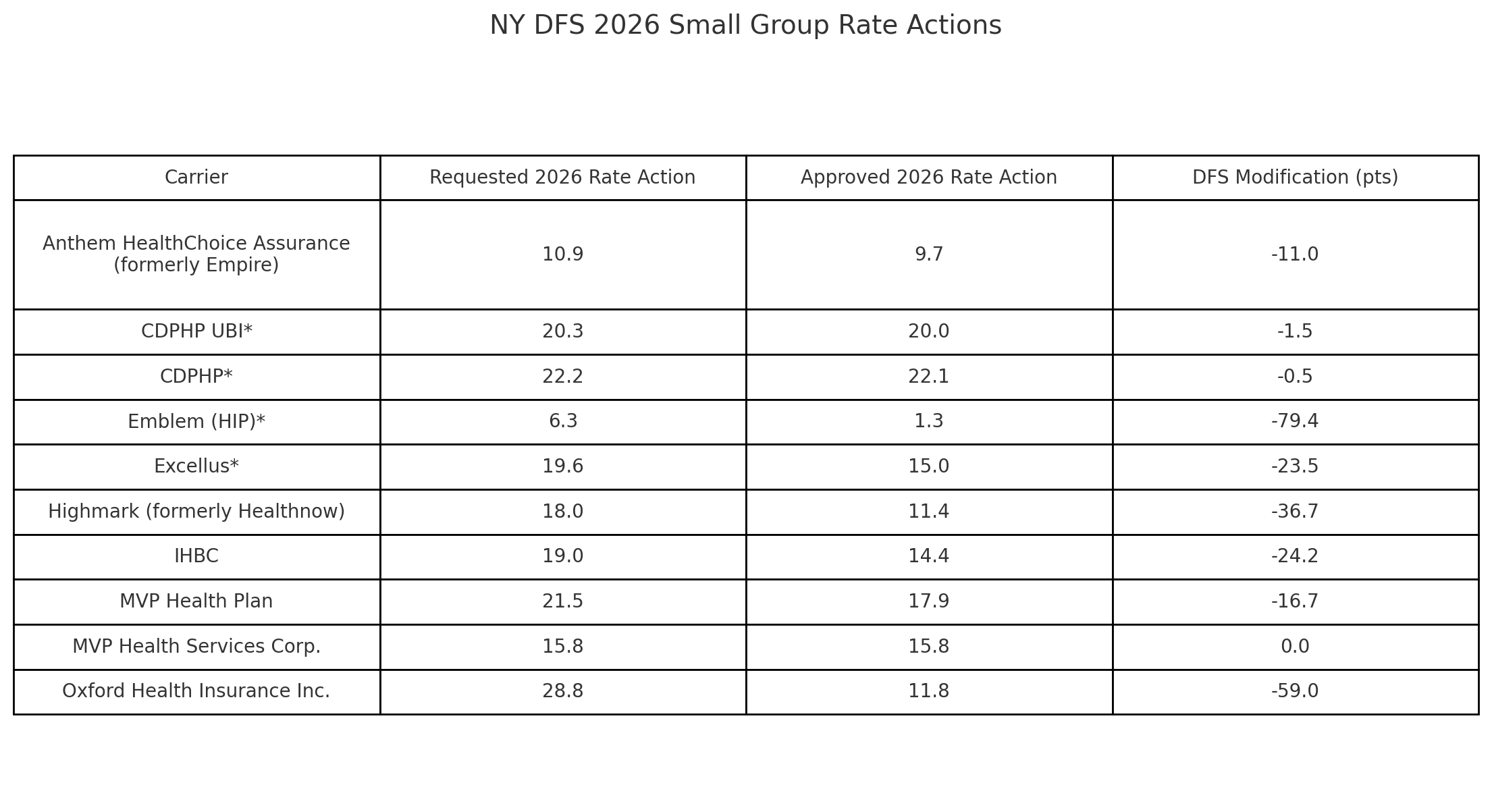
    On September 3, 2025, The New York State Department of Financial Services (DFS) announced the final rate increases for small groups in the 2026 plan year.

    Insurers requested an average rate increase of 24.0% in the small group market. DFS cut this average rate increase to 13.0% (a 45.8% reduction).

    Group Problem & Solution

    Problem:

    “We have Oxford/United Healthcare and the premiums have gotten outrageous. My broker says there are no other options. What can we do?”

    Solution:

    Call your health insurance broker and ask for alternatives. If none…

    Call The Insurance Doctor now or later, as we have access to a plethora of non-Obamacare health plans with networks such as the Cigna Open Access Network and the PHCS Multi-Plan network, more reasonably priced—and you can switch into them mid-year.


    Wishing you the best of luck!

  • Ticketmaster? Buyer Beware!

    Ticketmaster? Buyer Beware!

    My friends and I were recently having a conversation about “value,” comparing tribute (cover) bands versus some of the classic rock bands whose members are in their 70s and 80s today.  Years ago, the best entertainment value was sports games and music concerts. 

    Read below as to why those times are long gone!

    In September 2025, the FTC (Federal Trade Commission), joined by 8 states, filed a landmark lawsuit against Ticketmaster and its parent, Live Nation!

    Accusations include:

    1.  Deceptive Business Practices

    2.  Tacit Collusion with Ticket Brokers (Scalpers)

    3.  Profiting at the Expense of Fans

    The same week the lawsuit was filed, the U.S. Supreme Court declined to intervene in a class-action lawsuit trying to force Live Nation to arbitrate claims about “Rigged Ticket Pricing!”   

    Most consumers don’t really care about these legal matters; they care about what happens when they try to purchase tickets with exorbitant charges, such as “handling fees.” 

    My question is, what are “handling fees” since all ticket pricing and transactions are handled by a computer algorithm, with paper tickets no longer being accepted at most concert venues and sports arenas?

    According to the FTC complaint, Ticketmaster (Live Nation) handles roughly 80% or more of primary ticket sales (A Monopoly?) for major U.S. venues!  Their dominance gives them huge leverage as to how tickets are sold, how many reach customers (end users), and how many get funneled to secondary markets, often at massive markups.

    For example, Ticketmaster allows brokers to buy huge blocks of tickets even though there are rules about how many tickets a person can buy!  Ticketmaster gets double fees as the brokers pay a fee to buy their blocks of seats, then Ticketmaster gets a 2nd fee when the broker resells the ticket!  GREED is NOT GOOD!!!

    The complaint stated that a broker bought 772 tickets to a recent Coldplay concert for $81,000, then resold those tickets for over $170,000.  Think about kids crying because they can’t get tickets while the brokers and Ticketmaster are laughing all the way to the bank!

    Some of the mechanics of greed include, but are not limited to:

    1.  Hidden “junk” Fees: Ticketmaster advertises reasonably priced tickets, then adds extra fees at checkout (can be as high as 44%).

    2.  Broker Collusion: Turning a blind eye while brokers violate ticket maximum rules.

    3.  Triple Dipping: Ticketmaster makes money on the original sale in addition to the broker resale and again from fees when the tickets are resold on their own resale platform!

    4.  Deliberate Under-Disclosure: The complaint asserts that Ticketmaster intentionally resisted systems with ID verification that would curb the ability of brokers to “game” the system.

    5.  Bait and Switch: By advertising lower prices and adding fees later, the company is misleading consumers about the “all-in” net price!

    Personally, this has a huge effect on my life as I’ve been to over one thousand concerts and continue to frequent concerts and sporting events almost weekly!  We, as consumers, are in the same boat and should be angry about this. 

    Some things we fans should be looking for include:

    1.  Transparency:  “All-in” pricing on the main screen up front.

    2.  Stronger Anti-Bot Controls:  Industry tools that have been available, such as ID verification (2-step), to prevent ticket hoarding!

    3.  Alternative Models: Other ways to purchase tickets not from Ticketmaster.

    4.  Fee Caps: Ticketmaster should only be allowed a markup of a certain percentage over the ticket face amount.

    This will be an interesting Ticketmaster lawsuit, and it could change the way tickets are purchased, we hope!  When they started “Dynamic Pricing” about 3 years ago (meaning charging more per ticket for the Patriots and Bills games), I knew we were heading in this direction.

    Stay tuned!

  • Whey Protein: from Waste to Wealth!

    I can remember not long ago when the “Atkins Diet” was the big rage!  Now, it’s either a shortcut diet using GLP-1 drugs (Ozempic, Mounjaro, Wegovy, Zepbound, etc.) or the keto, paleo, or other “high-protein” weight loss diets have surged!!!

    According to Nielsen, “52% of U.S. consumers in 2024 reported actively looking for high-protein foods, up from 39% in 2019!!  This has created what I call “The Whey Protein Boom!”

    The next time you go to the gym, take a look to see where and how they display large tubs of “Whey Protein” for big money. 

    You might be asking yourself, ‘What is Whey Protein anyhow?’  Not long ago, whey was little more than a problem byproduct of making cheese i.e. a watery residue left behind after milk was curdled and strained!  Dairy farmers faced a quandary about how to dispose of it. 

    “From Waste to Wealth” is how I would encapsulate what’s happening today, as Whey Protein is a billion-dollar global industry driven by surging consumer demand for high-protein diets, fitness supplements, and functional foods.

    For every 10 liters of milk used, roughly 1 liter becomes cheese and 9 liters become whey.  Historically, this whey surplus was either discarded or utilized as cheap animal feed.  This ALL changed in the late 20th century when scientists and sports nutritionists discovered Whey Protein’s high protein content, including fast digestibility and branched-chain essential amino acids such as Leucine. 

    Whey Protein is now considered the gold standard in protein supplementation!  It is surreal how the economics have changed from the 1970s and 1980s to now as Whey is having its Way!

    Let’s take a look at some of the numbers: 

    1.  U.S. whey production increased 6X from 1990 to 2020, with U.S. whey exports also booming.

    2.  According to the U.S. Dairy Export Council, “whey products have accounted for nearly $2.4 billion in export value in 2023, with China and Southeast Asia being the primary markets. 

    3.  Whey Protein markets are expected to surpass $20 billion by 2030!

    4.  High-purity whey isolates (powder) can retail for $20-$30 per pound in consumer packaging.

    5.  The rise in the fitness culture, mostly in Europe and the US, has created an insatiable demand for quick and portable sources of high-quality protein.

    6.  The American public (not just bodybuilders) has embraced protein as a marker of health.  Market data from “Euromonitor” shows that the number of food and drink launches in North America making high-protein claims increased by over 80% between 2015-2022.   

    7.  Whey Protein has become a key ingredient in everything from snack bars to coffee creamers to infant formula!

    When tangible products boom, there are often concerns when production is scaled to current levels so quickly.  As the value rises, so does the scrutiny from critics who question the ripple effects of quantum production. 

    Key factors that critics are pointing out are:

    1.  Environmental Costs: of dairy farming, including methane emissions from cattle and water consumption. 

    2.  Ultra Processing Concerns: with some protein powders and the glut of “protein bars” that have flooded the market, most using soy to bind.

    3.  Market Volatility: now tied more to dairy supplies and high geopolitical trade (tariff) tensions with China and Southeast Asia.

    With skyrocketing demand and production, whey protein has started to get more attention.  Innovation is being worked on with dairy and other companies experimenting with “precision fermentation and lab-grown whey” to reduce the animal environmental impact. 

    It will be interesting to see if ‘the Whey Protein boom” continues at the same or a faster pace.  No matter what happens, Whey Protein is here to stay, YES WHEY!

  • Will Tariffs Increase Homeowners & Auto Insurance Premiums?

    Will Tariffs Increase Homeowners & Auto Insurance Premiums?

    Tariffs are one of the oldest types of taxes, and they are easy to collect.  During America’s “Colonial Period,” when the British ruled the country, tariffs enabled one of the earliest forms of tax evasion: smuggling.  In the north, with its long coastline and many small rivers, Rhode Island became the hub of smuggling to avoid British taxes. 

    When Alexander Hamilton became our first Secretary of the Treasury, the USA was in deep debt, so his first order of business was to prepare a schedule of tariffs and excise taxes on extras like alcohol and tobacco.  The Constitution forbids taxing states, which is why tariffs are only on imports!

    The 2 Main Objectives for Tariffs are:

    1.  Raising Revenue and
    2.  Protection of Domestic Industries from Foreign Competition

    The garment industry is a good example of protecting the domestic industry.  Many years ago, in the 1950s and 1960s, when my Grandma Anna was a “sample maker” for Diane Von Furstenberg in the “Garment District,” most of our clothing labels said “Made in the USA!”  Now they are made in China, Thailand, Cambodia, Bangladesh…because these countries have lower wages and much cheaper labor. 

    After World War II, much of Western Europe and Japan’s economies were weakened.  Reviving world trade was of paramount importance to the USA and our international trading partners.  For this reason, the USA agreed to “Differential Tariffs,” meaning that we would lower our tariffs more than other countries would lower their tariffs in order to help them recover from the cost of war and boost global trading!

    Now, 80 years later, Western Europe and the Far East economies have fully recovered.  Yet in many cases, “Differential Tariffs” still exist!  That is why the current administration has opted to try and level the playing field. 

    Tariffs can be tricky, as there are many ripple effects.  They are considered a “consumption tax” which affects the poor disproportionately because they must spend a higher portion of their income on necessities!

    Logic tells us that rising imported steel and aluminum prices will cause significant increases in building or rebuilding homes that are affected by inclement weather conditions.  The ripple effects will lead to more increase in homeowners’ insurance premiums.

    President Trump recently doubled the import tariffs on steel and aluminum from 25% to 50%.  This will have an adverse impact on the prices of large, imported items such as cars, trucks, refrigerators, and washing machines.  Smaller items that will be affected include but are not limited to soda, beer, canned soups and vegetables. 

    The tariff impacts on cars and trucks include the following:

    1.  New Cars and Trucks:  Sales prices of imported cars and trucks are expected to go up by at least the percentage of the import tariffs.  Average costs are expected to rise by $3,000 per vehicle.  The vehicle’s “replacement cost” directly ties into auto rates!

    2.  Rising Costs for Auto Parts:  Currently at a 25% tariff, auto parts and repairs make up a portion of your auto insurance rates.  There is also a shortage of “rare-earth” minerals (China controls them and stopped exporting them) that make heat-resistant magnets needed for Electric Vehicles.  A FORD factory in Chicago has already closed.

    3.  Replacement Parts: 60% of auto replacement parts come from Mexico, Canada, and China. 

    4.  National Projections:  The American Property and Casualty Insurance Association projects annual auto claims could go from $23 billion to $45 billion. 

    5.  Impact in New York: The state is expected to see among the highest increases in the country!  On average, residents could face an increase of $489 by the end of this year with $110 of that increase directly tied to tariffs.

    This is a difficult situation that will affect all Americans. 

    Options to reduce your auto rates are:

    1.  Shop your Auto Insurance Now, then go to steps two and three

    2.  Take the “Defensive Driver” course for a 10% discount per year, good for 3 years!

    3.  Consider the “Safe Driver” monitoring programs that most insurance carriers offer.  Discounts can run between 10%-30%, depending on the insurance carriers and how long they monitor your driving.

  • Real ID = Real Hassles?

    If you are at your weekly pickleball game and bring up the recent May 7th REAL ID deadline during your conversations, the odds are you will trigger a few personal stories about what friends are going through trying to obtain their REAL ID-compliant driver’s license.

    As of May 7, a REAL ID is required to board domestic flights and access certain federal facilities!  As per “The Points Guy,” REAL ID is defined as an enhanced ID card with stricter security standards that replaces a standard driver’s license!

    The irony of this deadline is that many Americans tend to wait to the last minute to comply; however, this mandate originates from the Bush administration, called “The REAL ID Act of 2005,” enacted to enhance the security of state-issued identification documents.

    The mandate has created significant angst for many Americans who have upcoming vacations or business trips.  It is important to note that there is an exception for children under 18, who are not required to have a REAL ID for domestic air travel; however, the accompanying adult MUST possess compliant identification!  Those with “special needs” and who are 18 or older still need to get a REAL ID for domestic travel.

    A REAL ID-compliant license features a “STAR Symbol” in the upper right-hand corner of your driver’s license (in most states).  Obtaining a REAL ID requires an in-person visit to your state’s Department of Motor Vehicles (DMV), as does an Enhanced ID, which has an American flag!

    In response to high demand and long wait lines, some states have implemented “alternative methods” to facilitate the acquisition of REAL IDs.  

    For example, New York State has set up “mobile DMV units” at events, such as the International Auto Show at the Jacob Javitz Center.  New Jersey has launched emergency issuance programs for urgent travel needs.  Some states allow Triple AAA (The Automotive Association of America) to handle REAL ID issuance.  The reason Real IDs are limited to the DMV or AAA is that the government needs our current picture scanned on file in the national database!

    There seems to be lots of confusion with this as many drivers have been turned away by the DMV for unacceptable documentation.  Also, the NYS DMV will NOT accept walk-ins without an appointment.  This problem has been affecting women disproportionately.  

    To avoid having to cancel upcoming vacations and reservations, let me set the record straight! To pass FREELY through domestic airport security checkpoints, travelers will need to present:

    1. A REAL ID-compliant driver’s license or alternative ID such as,

    2. A valid U.S. passport

    3. A “DHS Trusted Traveler Card” (aka Global Entry) 

    4. A Department of Defense ID or

    5. A state issued “Enhanced Driver’s License” (EDLs are issued by NY, Vermont, Michigan, Minnesota, and Washington)

    Even though this law was passed in 2005, the country is woefully unprepared, as there have recently been lines around the block at many DMV offices across the country.  Kristi Noem, the U.S. Secretary of Homeland Security, said when interviewed that there would be extra security steps necessary if passengers do not have the proper ID or alternatives.  I take this as it could depend on the mood of the ticket agents that day.  

    If you have a valid passport, you are fine and should not need to immediately obtain your REAL ID.  If you don’t have a passport, to fly domestically, you will need to obtain your REAL ID by providing supporting ORIGINAL documents that verify:

    1. Your Full Legal Name

    2. Date of Birth 

    3. Social Security Number and

    4. 2 Proofs of Residency

    The requested documentation may appear easier to provide than it is, especially for those who have changed their name over the years.  Married and divorced women are being affected disproportionately.  

    Heed these TIPS to avoid unnecessary angst and frustration:

    1. If you have a valid Passport, Wait until this situation gets resolved

    2. If you don’t have a Passport and are traveling in 6 months:  Start working on your documentation.  Note: If you have a “Global Entry Card,” you will be fine.

    3. If you don’t have a Passport and are traveling in 3 months or less: Go online now, click on your local DMV, and get an appointment, then start working on your documents.  It can take several weeks to get original marriage and birth certificates and social security hardcopy cards.

    4. If you don’t have the REAL ID Card: You might have to go through some extra verification and possibly extra screening (like taking off shoes) even though you might have TSA-Pre check status, as per The Points Guy!  

    5. MOST IMPORTANTLY: Go online to the government’s website www.dhs.gov/real-ID and check your specific home state’s requirements using their pull-down menu and follow instructions carefully!  Click on “Documents Needed!”

    In conclusion, for my readers, there’s no reason to be forced to cancel or delay any upcoming domestic flights!  

    Best of luck and Safe Travels!!

  • 23andMe Data Breached!

    23andMe Data Breached!

    The personal genomics giant 23andMe, a household name in the world of direct-to-consumer DNA testing and once a Silicon Valley darling, has filed for bankruptcy!  This could cause a personal information nightmare!

    The irony here is that 23andMe has filed for bankruptcy due to not being able to recover from a data breach.  The breach exposed 6.9 million users.  As per USA Today, in 2024, 23andMe agreed to settle a class action lawsuit for $30 million.  The money went to affected users, and 23andMe admitted no wrongdoing!

    The makers of home DNA kits, such as 23andMe, are NOT subject to HIPAA (Health Insurance Portability and Accountability Act) laws, which ensure medical record privacy!

    As the company’s financial unraveling plays out, there are many unanswered questions:

    1.  What happens to my personal data?

    2.  Can 23andMe sell or release my data?

    3.  Is there a way of deleting my data?

    4.  Is there a way of protecting my data?

    These 4 questions and others remain for the over 14 million 23andMe customers. 

    For years, companies like Ancestry.com and 23andMe advertised on TV and radio, with their flashy ads stimulating the endless possibilities of family curiosity.  Consumers bought “kits” for a few hundred dollars, trustingly mailed off their saliva, and eagerly awaited the results from scientific reports going back in some cases hundreds of years.  In return, many received colorful charts and learned of newfound cousins…

    Selling material goods is one thing, as materials can always be replaced.  In this case, consumers trusted 23andMe with something that is irreplaceable, the blueprint of who they are!  Now what?

    Let’s take a look at bankruptcy.  Bankruptcy is not just financial collapse, it often means “asset liquidation!”  For a company like 23andMe, their most valuable asset is data, not office equipment or lab space.  With personal details such as health histories, family connections and demographic profiles, this data can be a goldmine or a loaded weapon!

    23andMe has stated it would not sell genetic data, and that privacy would remain a priority.  The trust that once permeated their user base is now eroding quickly.  Bankruptcy courts can override corporate promises when creditors are owed, and buyers are circling like sharks!  Even if the data is NOT sold, the risk of leaks, mismanagement, and/or misuse increases dramatically in this type of situation.

    The potential abuse or leaked data implications are staggering!  This isn’t like a credit card number, which can be changed after a breach. Released health information can reveal a predisposition to diseases. Family secrets can be exposed, and relatives who never agreed to testing can be implicated.  One can only imagine what could happen should this information end up in the hands of insurance companies, employers, or foreign governments!  The days of blind trust in personal genomics are over!

    Law enforcement officials, New York State Attorney General Leticia James’ office, and other state attorneys general offices (experts agree) are encouraging 23andMe customers to protect their privacy by:

    1.  Logging in and deleting their data, and…

    2.  Requesting the destruction of their DNA samples

    At one point, the 23andMe website crashed.  Their directive is to contact your state attorney general’s office after deleting your information and requesting DNA sample destruction.  There should be a confirmation sent out once the deletion/destruction process takes place. 

  • Funflation is Here!

    Funflation is Here!

    Recently, I saw a piece covered by two TV stations that mentioned that the “Top of the Rock” was moving towards “Dynamic Pricing!”

    The “Top of the Rock”, also known as the rooftop of Rockefeller Center, is known for its unobstructed views of iconic landmarks, such as the Empire State Building, Central Park, the Chrysler Building, the George Washington Bridge, the Brooklyn Bridge, One World Trade Center and the Statue of Liberty!

    You might be asking yourself, “What does this mean?” 

    Have you noticed in recent years that the cost of attending live events, whether it’s a major sports game, a concert, or a Broadway Show has skyrocketed?  This phenomenon, often called “FunFlation,” refers to the rising prices of entertainment due to increased demand and evolving ticket pricing strategies.

    One of the biggest drivers of ‘FunFlation” is “Dynamic Pricing!”  This is similar to airline and hotel pricing, where vacationers are charged more money during spring break compared to the vacation offseason.  Dynamic Pricing uses an algorithmic model that adjusts ticket prices based on demand, often making events far more expensive than they were just a few years ago.

    The “Dynamic Pricing Model” benefits organizers, artists, and teams by maximizing revenue.  I call it a MONEY GRAB!  It also drives up costs for fans, especially for high-profile events!  Some artists have deflected blame to ticket companies.  The situation is murky at best.

    The “Top of the Rock” is a perfect example of what “Dynamic Pricing” is doing.  I went to their website, which advertises an adult ticket (ages 13+) for between $40-$61.  The prices can change by time slot as the early afternoon prices were $40 each; however, going during the sunset hour can cost $100 each.

    Ticketmaster’s Dynamic Pricing Model can change ticket prices in the middle of the on-sale process based on demand.  In the “old days,” which can be only 3 years ago, ticket prices for entertainment events were fixed, with different tiers based on seat location and venue capacity.  This means that you can buy a ticket, for example, for $100 during a “pre-sale” event that can double in price 15 minutes later, based on demand.  The “re-sale” sites like Stubhub can be even worse as ticketholders can jack up the price even more after or during the ticket sale period. 

    For the first two years of the COVID-19 pandemic, there was no live in-person entertainment.  I remember when major league baseball and NBA teams were playing in empty stadia with cardboard boxes in seats instead of fans.  Once this ended, demand for live entertainment skyrocketed!

    Live Nation statistics show live music stadium shows are up 60% this year over the first two months of 2024.  Numerous artists are planning big tours for 2025, such as Bruce Springsteen, Beyonce (with Post Malone), Pitbull, Sabrina Carpenter, Billy Joe,l and AC/DC (in Europe, not the USA), to name a few. 

    Some tips to avoid being a victim of “Dynamic Pricing” are:

    1. Pre-Sale: Try and budget your time accordingly so you can buy tickets as soon as the portal opens, before “Dynamic Pricing” kicks in.
    2. Check Other US Cities: Often, other cities have much better pricing than major cities such as New York.  For example, on 4/10/2021, we found much better-priced tickets for The Rolling Stones in Pittsburgh than in New York.  We flew to Pittsburgh and stayed in a hotel for two nights for less than it cost to go to the show at MSG.
    3. Check Other Countries:  During the Taylor Swift “Eras Tour,” savvy concert goers flew to Poland for much better ticket pricing and got a mini vacation out of it for less than going to the USA.

             In closing, it makes financial sense to do your homework when buying tickets for live entertainment!  ENJOY the shows!