Category: Finances

  • 12 Fixed Annuity Advantages

    12 Fixed Annuity Advantages

    The Federal Open Market Committee or FOMC is the Federal Reserve’s monetary policymaking body.  It is responsible for the formulation of a policy designed to promote stable prices and economic growth.  Simply put, the FOMC manages the nation’s money supply!

    The Federal Open Market Committee (FOMC) holds eight regularly scheduled meetings (usually every six weeks) during the year.  Last month, during their March 15th-16th meetings, the FOMC approved its first interest rate increase for the “Federal Funds Rate” in three years.  The reason for the rate increase is to address spiraling inflation without torpedoing economic growth.

    This brings the “Federal Funds Rate” (the bank lending rate banks charge each other for interbank overnight lending) from zero to between 0.25%-0.5%.  They had kept the rate near zero since the beginning of the Covid-19 pandemic.  The FOMC has all but committed to small increases for each of their next six meetings, which could bring that rate up to 1.9% by year’s end! 

    You might be asking yourself “what does this all mean and how do these interest rate changes impact me and my family?”  The move in the “Federal Funds Rate” corresponds to an increase in the “Prime Rate,” which immediately pushes lending rates higher for most forms of consumer borrowing and credit.  This means mortgage rates, car loans, and some variable student loan interest rates will be increasing. 

    The good news is this also means that bank account and CD (Certificates of Deposit) rates will increase as will fixed annuity rates!  When fixed interest rates go up, it can have a negative effect on the stock market, as conservative investors often reposition funds from the “choppy” stock market in favor of the fixed, predictable, and guaranteed interest rate returns of fixed annuities, CDs and bank accounts. 

    Fixed annuities are written primarily by insurance companies offering safe alternatives that provide fixed, guaranteed, and predictable returns.  They are also one of the more flexible financial products.  Fixed annuities can be converted into a guaranteed income for life, similar to a pension with a guaranteed monthly income.  They make an excellent pension supplement or primary pension if you do not have one.  Fixed (no fee) annuities are often confused with variable annuities which can have high fees. 

    See My Top 12 Advantages of Fixed Annuities below:

    1. Guaranteed Interest Rates: You can choose how long to guarantee your interest rate, usually between 3-7 years.

    2.  Guaranteed Principal: The principal is protected regardless of market conditions, company performance, or the economy.

    3.  Interest Rates: Insurance companies offer higher interest rates usually by 0.25%-0.50% than bank CDs, bonds, or Treasury Bills!

    4.  Tax-Deferred:  You do not pay income taxes until you start withdrawing funds, which allows for faster accumulation providing greater income.

    5.  No Fees:  You pay NO annual management fees while funds accumulate and NO fees on death benefits to heirs!

    6.  Protected From Creditors: If you get sued, creditors cannot go after/attach fixed annuity funds.

    7. Bypasses Probate: Fixed annuity death benefit proceeds bypass probate. They save on estate fees, and court costs and go directly to named beneficiaries outside the will. They are private and therefore cannot be contested.  Usually, the beneficiaries receive the lump sum funds in 1-2 weeks.     

    8. Lifetime Income Options Available:  At any time, your annuity may be converted into a guaranteed lifetime income stream you cannot outlive.  This product works very well for seniors looking for a steady income.  The biggest fear of seniors is the fear of “running out of money!”

    9. Annual Withdrawal Options Available:  Most fixed annuities allow for withdrawals between 10%-20% of the account balance annually.

    10. Annuitization: This unique annuity feature allows the policyholder to take a guaranteed income for life or a shorter-term (such as 10 years) and have a portion of the income excluded from taxation.  There are a variety of guaranteed income combinations to choose from.

    11. State Protection: Should the annuity insurance company become insolvent, there are state protections (depending on which state you reside) with limits between $100,000-$500,000 in most states.

    12. Piece Of Mind:  Fixed Annuities are secure and offer peace of mind to account holders knowing they are guaranteed to not lose money regardless of economic uncertainties.

    In conclusion, Fixed Annuities should have a place in everyone’s portfolio!  

    For more information and a no-fee consultation to discuss your specific needs, feel free to reach out to me at Rob@InsuranceDoctor.us

  • Why a 2022 Social Security boost may not be enough

    Why a 2022 Social Security boost may not be enough

    The Social Security Act (SSA) was signed into law by then-President Theodore Roosevelt on August 14th, 1935. In addition to several provisions for the general welfare, the new Act created a social insurance program designed to pay retired workers aged 65 or older, a continuing income after retirement. 

     As per SSA.gov taxes were collected for the first time in January of 1937, and the first one-time lump-sum payments were made that same month. What many people did not know at the time is the average life expectancy in 1935 for men and women was 59.9 and 63.9 respectively. Roosevelt must have figured few people would live long enough to collect.

    Social security is indexed for inflation, which is currently running rampant. It is hard to not notice the prices of goods and services have been rising. Comparing September 2020 to September 2021, for example:

    1.   Gas has increased an average of 42%

    2.   Eggs have gone up 35%

    3.   Bacon had a 28% increase

    4.   Used or Pre-Owned cars are up 24%

    5.   Kids shoes up 12%

    6.   Food on average is up 12% and

    7.   Furniture is up 11% over the last 12 months

    inflation CPI cost of living
    The rapid rise of consumer goods outpaces income for many

    When inflation surges like this, older Americans are the ones who are affected the most. Many seniors are on a fixed income and have their money invested conservatively, such as bank accounts and bank CDs (which I call Certificates of Disappointment!) This time of high inflation and super-low interest rates compounds the problem for many senior retirees.

    The good news is that it was just announced that Social Security recipients are slated to receive a 5.9% cost of living adjustment (known as COLA) in 2022! This benefit increase would be the largest in nearly 4 decades. 

    Based on my 7 examples above, the 5.9% increase will still not be sufficient to offset the skyrocketing increase of goods and services. In addition, there is the federal Social Security tax bite of 50% for individuals earning between $25,000 and $34,000 and 85% for single tax filers earning over $34,000 per year.  For joint tax filers, income between $32,000 and $44,000 would pay a 50% tax on your benefits. Couples earning over $44,000, up to 85% of your benefits may be taxable. Certificates of Deposit (CD’s) compound the issue because the taxable interest they earn (even though you don’t withdraw it) counts against your income.

    Other than repositioning assets and investments, older Americans have few options to increase their cash flow to absorb price hikes outside of returning to work or increasing hours of employment should they still be working. 

    See my tips below on options to help you offset inflation eating away at your purse or wallet:

    1.   Consider Credit Unions or Internet Banks: Both credit unions and internet-only banks will usually pay higher interest rates than brick and mortar banks.

    2.   Consider Transferring CDs to Fixed Annuities: Fixed annuities (issued by insurance companies) help in 3 ways. They typically offer higher interest rates than CDs.  The interest is tax-deferred, which lowers Social Security taxes, and most CD’s allow for a 10% per year no-fee withdrawal. If you withdraw (break) CD money before maturity, you lose ALL of the interest accrued. 

    3.   Consider Selling Your Life Insurance Policy if Not Needed: For older Americans, (especially in poor health) a life insurance settlement could make sense. We have been able to help clients obtain 2-5 times their life insurance cash-values (lump sum with usually no tax) by selling their no longer needed life policy, as well as saving them money they were paying in monthly premiums.

    4.   Consider a Reverse Home Mortgage:  Homeowners could be sitting on an inflation hedge by tapping into their home’s value with a reverse mortgage. This is not for everyone. It is wise to consult with a professional. Homeowners with no mortgage balance could set up monthly payments or a line of credit that can be tapped as needed. Those who are currently making mortgage payments would immediately see a boost in monthly cash flow by refinancing into a reverse mortgage; hence, eliminating their required monthly mortgage loan payments. 

    A great mentor of mine used to say, “the situation is the boss.” Each situation is different. There are other options like series I-savings bonds too numerous to mention. The worst possible decision is to DO NOTHING!

  • Good Credit = More $$$$

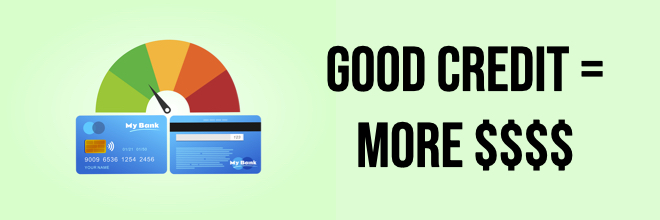
    Good Credit = More $$$$

    Your credit score is one of the most important measures of your financial health! I have found that few advisors have a handle on how to coach their clients to improve their credit scores.

    There are ripple effects to having good or poor credit. The better your score, the easier you will find it to be approved for new loans and or lines of credit. A higher credit score can give you access to the lowest available interest rates when you decide to borrow. Good credit will improve your odds of getting approved for credit cards. There are employers that will run your credit score before deciding on hiring you. In addition, the higher your score, the less money you will pay for auto and homeowners insurance premiums!

    Regardless of your age or current credit situation, it is NEVER too late to improve and/or build your credit. It takes some time, effort, discipline, and in some cases, breaking bad habits. There are niche companies that charge thousands of dollars to help fix your credit. You will not need to hire them if you heed my 10 tips below:

    1.   Review Your Credit Reports: You must start somewhere, so review your current credit reports. This is free and easy to do. You can pull a copy of your credit report from each of the 3 national credit bureaus: Equifax, Experion and TransUnion. This can be done for free once per year at www.AnnualCreditReport.com. To improve your credit, it helps to know what is working against you or in your favor.

    2.   If Possible, Pay Off 100% of Your Balances Every Month:  Carrying over balances from month to month is a costly way of doing business. If this is an issue for you, I suggest enrolling into “auto-pay” online, one credit card at a time, so you can stabilize your finances. Payment history counts for about 35% of your credit score. 

    3.   Correct Inaccurate or Additional Personal Information: Almost 90% of credit reports have your credit or personal information on you that is either inaccurate or dated. 

    4.   Keep Credit Balances Below 30% of “Available Credit:” Credit card balances should be below 30% of your available credit ALL the time! If you need more credit, get another credit line.

    5.   Consolidate Student Loans:  There are banks that have special programs designed to consolidate existing student loans (usually for balances of $100,000 or more) into one loan at a lower interest rate, which can save you $100’s per month from day one.

    6.   Limit Credit Inquiries: You should have a maximum of 7 or less credit inquiries per year. Any more than that can negatively affect your score.

    7.   Consider Adding an Additional Authorized User: This is an excellent way for parents to help young adults start building credit with little effort. The parent adds their child as an eligible user which starts building a history for the youngster. The more years you have credit, the better your score!

    8.   Consider Joining a Local Credit Union: Many Credit Unions have good initial offers for new member-clients and more liberal rules than banks.

    9.   Keep Old Accounts Open and Deal with Delinquencies: Do NOT close old credit cards that you might not be currently using. One of their formulas is to measure the “average age” of all your cards. The older the better.

    10.Use Credit Monitoring to Track Your Progress: Credit monitoring services are an easy way to see and learn how your credit score changes over time. These services can also protect you from identity theft. The best credit monitoring services notify consumers about changes in their credit and the reasons why.

  • Lucky-7 Tips 2 Save $$$ in 2021!

    Lucky-7 Tips 2 Save $$$ in 2021!

    By the time you read this, we will thankfully have waived “good riddance” to 2020! Wishing you and your family a Happy, Healthy, and Prosperous 2021!

    Covid-19 has created many behavioral shifts in the year 2020! Some behavioral shifts are temporary, and some could be here to stay. One of those shifts has been toward internet shopping for holidays, tangible gifts, and sometimes large purchases we previously bought at the “brick and mortar” store. Instead of touching, feeling, and trying on, we now click the mouse a few times and “voila,” the item appears. If you are an “Amazon Prime Member,” your purchase is received within 48-72 hours and with FREE Shipping.

    2021 could be another difficult year, especially with the uncertainty in the job market. There will always be the need to shop for gifts, seasonal purchases, and necessary items, so heeding these LUCKY 7 TIPS can go a long way to controlling your 2021 expenses:

    1.   Consider Buying Off-Season:  A little bit of internet price studying and patience can go a long way to spot pricing trends. New Year’s Sales are underway and many summer items are now on sale. 

    2.   Consider Setting Up a Gift Closet or Large Draw: A client shared this with me as she turned a little-used hallway closet into a gift closet, which saved her money many times throughout the years. She buys offseason gifts only on deep discount then decides later who gets what.

    3.   Camel, Camel, Camel: Amazon.com discounts by category.  Camel, Camel, Camel (CCC) is an Amazon price tracker. Find the product you are interested in buying, then cut and paste the URL into CCC to look up it’s price history and/or create a “watch-list” for that item.

    4.   PriceBlink: PriceBlink lets you know when the item you are viewing can be bought for a lower price elsewhere. After Amazon, online stores such as Walmart, Target and Ebay account for the majority of internet sales. PriceBlink searches over 11,000 merchants for lower prices, coupons, and FREE shipping.  Give it a try!

    5.   Download the Rakuten FREE App or Browser Extension: Rakuten (formerly EBATES) works like all cashback sites (like IBOTTA) by sharing the commission that they receive from retailers. You are paid every 3 months for purchases made during the spending-period, and you can get cashback bonuses for joining and shopping.

    6.   Consider Using Poshmark as an Alternative to Ebay: Poshmark, (founded in 2011), is a website where one can buy and sell new and used clothing, shoes and accessories. It is FREE to list an item for sale on Poshmark. After the item sells, Poshmark deducts a fee from the final order. For sales under $15, a flat rate of $2.95 and for sales above $15 the fee is 20%. On the higher-priced items, EBAY might be the better choice.

    7.   Add the Honey Google Chrome Extension to Your Computer: On your laptop, IPAD, or desktop click www.JoinHoney.com and add the FREE extension. This extension (not for mobile phones) automatically searches for the best prices (often less than Amazon and eBay) and notifies you immediately at checkout

    Since we are headed into the dog days of winter and quarantining is safer than going from store-to-store, these Lucky-7 online shopping Tips can save you big $$$ in 2021, albeit with a little patience. Give these Lucky 7 TIPS a try!

    To be added to our monthly email (which includes 3 articles) newsletter, email “ADD ME” as well as any feedback, questions, or financial topics you are interested in learning about to Rob@InsuranceDoctor.us.

    Be Positive, Test Negative, Happy New Year!!

  • The “Nobody CARES Act”

    The “Nobody CARES Act”

                Reflecting back on my childhood, the week after Labor Day was usually a time when I was feeling a range of emotions from excitement (to see many of my school friends whom I missed over the summer) to some apprehension about the new school year.  This year, the vibe for both students and parents is different because of COVID-19.

                When “The CARES Act” was enacted in late March everybody knew the $600/week unemployment bonus was expiring on July 31, 2020.  If politics were like golf, originally (in July) the Senate was playing for the “COVID” 19th hole, whereas the House of Representatives was playing for the next round.  The Senate said they would be willing to address the unemployment issue by itself, while the House of Representatives was holding out for a “new comprehensive package.” 

    RESULTS: Both parties went on vacation for the first 2 weeks of August.  President Trump then signed an executive order to cut these benefits in half ($300/week) with the states (most of whom are broke) expected to kick in an additional $100.  For New York State, Governor Cuomo’s office calculated that bill would add an additional $4.2 Billion to the $30 Billion we are already in the hole.  It is unlikely that most people will receive the extra $100 any time soon.  As of this writing, it is not clear if anyone has received the said $300/week which should be retroactive to August 1st.

                When the President made comments about the United States Post Office, the House of Representatives reconvened (and flip-flopped) that weekend to address just that Post Office issue, leaving The NOBODY “CARES ACT” dormant through the month of August.  Does this mean that “their votes” are more important than the people and families they represent?  It is time the leaders who represent us put our needs before their own!

                In addition, the $1,200 stipend and The Triple P (Payroll Protection Program) money from the NOBODY “CARES ACT” has mostly dried up (it ended in August) as business owners have been paralyzed due to conflicting rules and uncertainty as to when and how they can reopen.  To complicate matters, the Federal Government is facing a shutdown on September 30th and the USA’s cumulative debt is on schedule to eclipse the size of our economy next year.  We would be joining Japan, Italy, and Greece with debts larger than their economy.  It’s expected that U.S. debt will be equal to 98% of the nation’s Gross Domestic Product (GDP) by year-end. 

                The restaurant industry in New York City has felt the brunt of these political decisions.  Queens restaurants, in particular, have been hamstrung by this as Rockaway residents can drive 20 minutes and be on Long Island to enjoy alcohol and indoor dining.  New York City and New York State have had the lowest COVID-19 positivity rates (by the percentage of tests) in the country for some time now.  Alcohol (which I call truth-serum) has been a big factor in COVID-19 spiking, especially in colleges.  Why not allow city restaurants to reopen first with no alcohol?  Malls and Casinos are now opening (at 50% and 25% capacity, respectively).  The current explanation for not allowing city restaurants to open for indoor dining is because the SLA (State Liquor Authority) and the New York State “Task Force” does not have enough employees to inspect the restaurants.  Inspections could be easier (and take less time) if this short-term compromise is proposed.  Instead, lawsuits will bring longer delays before the cold weather is upon us.

                All these economic decisions have ripple effects and are interrelated.  Take the “school dilemma” for example.  What is now happening is that child-care needs are affecting jobs.  Families either cannot find or afford home care for stay-at-home students.  This is causing secondary wage earners (the majority are women) to give up their jobs even though they are in their prime income-earning years (ages 25-54).  For some households, that $300+ per week check could make the difference and save those jobs. 

                It is not all “gloom and doom!”  Although conducting business will be difficult this fall in many professions, there are planning strategies available to us in order to overcome these roadblocks.  Stay tuned to this column for more creative ideas on how to do so and KEEP THE FAITH! Feel free to reach out to me at Rob@InsuranceDoctor.us to continue these discussions, for a personal review, or if there are topics you want to learn about, do not hesitate to contact me!

    Rob Intelisano
    The Insurance Doctor

  • Thinking Clearly in the Middle of Chaos

    Thinking Clearly in the Middle of Chaos

    You don’t need me to tell you that this country is upside down right now.  There has never been a more important time to think clearly and adapt to the current situation.  With 40 million unemployed and another 10 million not seeking work, many are in a “financial” survival mode.  One in three Americans have yet to receive their unemployment checks!  Most advisors suggest keeping an “emergency fund” of 6 months income.  Even for those who have heeded the advice, the six-month fund is dwindling as New York City has been slow to reopen.

    The way unemployment is structured, with the Federal Government adding $600/week in addition to the state unemployment benefits, can be a deterrent to employees returning to work.  In New York State, the maximum is $504/week plus the $600= $1,104/week.  This could represent a raise for many, so why go back to work when you can stay home and possibly earn more money?  New Jersey caps out at $681/week, Connecticut at $649.  Florida has the lowest cap at $275; however, they have no city or state income tax.  The highest cap is Massachusetts, which has a range of $769-$1,220 depending upon the eligibility.  These numbers don’t mesh well with the Paycheck Protection Program (The Triple P), because business owners have to spend the money now over the next 8 weeks when their employees refuse to return to work.

    The public knows this “generosity” won’t last forever, so many are tightening up on their spending.  If you’re on a salary, you can’t increase revenues, only decrease expenses.  Here are a few tips to reduce expenses:

    1. Whole Life Insurance: If you have a traditional dividend-paying life insurance policy (the older the better), consider changing your dividend option to “reduce premiums.”  For example, you have an old $50,000 policy, the premium is $1,000/year and your dividend is currently $600.  You can change the $600 dividend to “reduce the premium” and now you would only have to pay the $400 difference, saving you 60%.
    2. Auto Insurance: Since many are self-quarantining, auto insurers are reducing prices.  Some are giving credits.  It’s a good time to shop the auto insurance market.
    3. Life Insurance Settlements: During the Covid-19 pandemic, “Life Insurance Settlements” can be a lifeline for seniors who could be struggling financially, and who own a life insurance policy in danger of lapsing.  These policies can hold significant re-sale value.  We have been able to sell policies with zero cash value for 20%-30% of the death benefit.  It’s important for seniors to realize they can sell their policy for a lump-sum of cash, instead of having to continue to pay premiums. We have 23 Funders who bid against each other in an auction, which ensures our clients will get the maximum lump-sum offer.

    Feel free to reach out to me to continue these conversations at Rob@InsuranceDoctor.us or www.InsuranceDoctor.us and complete our simple contact e-form.

    Be Safe and Wash those Hands!

  • Phase One Reopening

    Phase One Reopening

    As you probably already know, other than the 5 boroughs, New York State has reopened this week.  What does this mean for Rockaway and Queens?

    The way business owners decide to spend their CARES Act stimulus package Payroll Protection Program (AKA the Triple PPP) money, will have a direct effect on our economy and the unemployment rate through this summer and probably the rest of the calendar year. 

    In Rockaway, it will be interesting to see which restaurants can adapt first to efficient takeout and then when able to fully open (see the Phases below). 

    Earlier this week, I was listening to the Jim Kerr Q104.3 Morning Rock-n-Roll Show and Shelley Sunstein (Jim’s sidekick who can cook) mentioned that she’s accustomed to cooking at home now and will start ordering takeout from restaurants with food she’s not capable of cooking at home.  If this theory is correct, then restaurants like Uma’s and Kimo’s should do well right off their reopening.

    Although I have had my issues with Governor Cuomo (like his ego-based forcing out Rockstar Andy Byford from the MTA); he has done an effective job on a daily basis communicating Covid-19 expectations to lower death rates currently under 100/day in New York State.  By tying performance-based Covid-19 goals to open regions, he helped people focus on Phase One “TEAM GOALS.”

    Phase One:

    • Construction
    • Agriculture, Forestry, Fishing and Hunting
    • Retail – (Limited to curbside or in-store pickup or drop off)
    • Manufacturing
    • Wholesale Trade

    Phase Two:

    • Professional Services
    • Retail
    • Administrative Support
    • Real Estate / Rental & Leasing

    Phase Three:

    • Restaurants / Food Services

    Phase Four:

    • Arts / Entertainment / Recreation
    • Education

    During these times there are opportunities everywhere for those seeking them.  I’ve been saying since this outbreak that EVERYTHING IS NEGOTIABLE during the Covid-19 era. 

    Earlier in the week I sat on a great Zoom webinar presentation given by a HIGH-LEVEL CONCIERGE TRAVEL AGENT.  I asked a question about getting a full refund on my flights to Buffalo (to see the Rolling Stones show now postponed) next week and she said the airlines are only giving credits for 12-24 months.  This motivated me to call Jet Blue immediately after the webinar ended.  After an hour wait, I calmly stated my position to the Jet Blue representative and he gave me a full refund with no arguments.  I couldn’t believe it!  Jet Blue had inundated me with emails and changed my flights about 5 times and asked for a reply to confirm, which I never did.  Turns out, their rule is if the flight is changed more than 2 hours from the original itinerary, then you are entitled to full refund!  Who knew?

    Try it yourself and KEEP THE FAITH!

    -Robert

  • 6 Tips for your Financial New Year’s Resolution

    6 Tips for your Financial New Year’s Resolution

    Six out of ten American’s will make some type of financial-based new year’s resolution for 2020.  Usually, there’s a triggering event like receiving your December 2020 credit card bill or spousal pressure to name two.  Follow these tips;

    1. Consolidate Financial accounts: Close 1 or 2 existing financial accounts that you are not tracking or have insignificant monies in.  This will save brain space, reduce statement clutter and avoid paying unnecessary fees.
    2. Increase your 401k/employer retirement contributions: Raise your contributions at least another 1% per year minimum.  You won’t feel the difference however over time it can make a major impact when entering retirement.
    3. Develop a budget and/or expense statement: Review credit card, bank, and checkbook statements to get a handle on inflow and outflow of money.  Start using a program like quick books or if old school draft a budget by hand and hang it up where you can see it.  This can cause heavy emotional denial however better now than later.
    4. Set up a system to save systematic money:  Either something informal like putting the $20 you are saving in gas on fill-ups in a jar.  Formal ideas like buying a cash value life insurance policy or setting up an EFT through your bank account.
    5. Protecting your health saves your wealth: We all know about the escalating cost of health insurance and health care in general.  Renew that gym membership, yoga studio or dust off that treadmill in the garage. 
    6. Bring balance to your life: Take that vacation you have been putting off.  The rest and rejuvenation will impact your health.  Statistics show that one who works 46 weeks/year will out produce a 52 week/year worker.

    It will give you something to look forward to and forces one to be very productive before leaving and when returning home.  Use frequent flyer miles if need be.

    You will be amazed by how much better you will feel by following these 6 easy steps!

  • 6 Tips to Get Your Financial House in Order

    6 Tips to Get Your Financial House in Order

    The year’s end is hectic between the holidays, parties and kids being home from school.  It’s easy to get off track during the 4th quarter.  Follow these 6 tips and with a little time and effort your 2019 finances will be more organized and less stressful.inset2

    1. Organize your paperwork: It’s hard to feel in control when you can’t find anything.  Gather all papers, shred duplicates/old statements and put them all in a box or accordion file.
    2. Go Paperless: Wherever possible create electronic files.  See if you can receive e-bills instead of paper.  Use a flash drive as a back-up and keep it off-premises.
    3. Protect against identity theft: You can request a free copy of your credit report once/year from all 3 credit bureaus.  Go to www.AnnualCreditReport.com
    4. Put your finances on autopilot: Use EFT direct deposit for all checks, pension and social security received.  Set up automatic payments for recurring bills.
    5. Create your 2016 tax file: Most people have to scramble to pull together all tax forms etc.  Start now by setting up a 2016 file and stashing forms/receipts etc as needed.
    6. Review your insurance coverage: Protect your nest egg and family by regularly reviewing your life, health disability, and long term care insurance.  If this is confusing to you contact us for a 2nd opinion.

    Your financial house needs regular upkeep.  Putting in a little time and organization will decrease clutter and help you focus on your goals and objectives. Contact Robert today to get your financial house in order in 2016.

  • 6 Tips for your Financial New Year’s Resolution

    6 Tips for your Financial New Year’s Resolution

    Six out of ten American’s will make some type of financial based new year’s resolution for 2019.  Usually, there’s a triggering event like receiving your December 2018 credit card bill or spousal pressure to name two.  Follow these tips:insurance, New York, financial services

    1. Consolidate Financial accounts: Close 1 or 2 existing financial accounts that you are not tracking or have insignificant monies in. This will save brain space, reduce statement clutter and avoid paying unnecessary fees.
    2. Increase your 401k/employer retirement contributions: Raise your contributions 1%/year minimum.  You won’t feel the difference however over time it can make a major impact when entering retirement.
    1. Develop a budget and/or expense statement: Review credit card, bank, and checkbook statements to get a handle on inflow and outflow of money. Start using a program like quick books or if old-school draft a budget by hand and hang it up where you can see it.  This can cause heavy emotional denial, however, better now than later.
    2. Set up a system to save systematic money: Either something informal like putting the $20 you are saving in gas on fill-ups in a jar.  Formal ideas like buying a cash value life insurance policy or setting up an Eft thru your bank account.
    3. Protecting your health saves your wealth: We all know about the escalating cost of health insurance and health care in general. Renew that gym membership, yoga studio or dust off that treadmill in the garage.
    4. Bring balance to your life: Take that vacation you have been putting off. The rest and rejuvenation will impact your health.  Statistics show that one who works 46 weeks/year will out produce a 52 week/year worker. It will give you something to look forward to and forces one to be very productive before leaving and when returning home.  Use frequent flyer miles if need be.

    You will be amazed at how much better you will feel by following these 6 easy steps! Contact Robert here for a free consultation.