Category: nutrition

  • America the Beautiful… and Fat!

    America the Beautiful… and Fat!

    As per the Global Obesity Observatory, America has rated the 14th highest adult obesity rate in the world with 36.47% of all adult Americans being considered obese!  The first 13 countries are ALL islands.  According to the Organization for Economic Cooperation and Development (OECD), The U.S. adult obesity rate will reach 50% by 2030. 

    The Wikipedia definition of obesity is a condition in which excess body fat has accumulated to such an extent that it may have a negative effect on health! 

    The island of Nauru (formerly known as Pleasant Island) leads the world with a 59.85% adult obesity rate.  Japan has the lowest adult obesity rate of first world countries at 4.97%, formerly at 3%.   Perhaps too much fast food has found its way to Japan.  Currently, the lowest adult obesity rate in the world is Vietnam at 1.67%.

    Our addiction to sugar is the primary reason behind the obesity problem.  This starts at a young age eating sugar-laced baby food.  As per the Center for Disease Control (CDC), the U.S. child obesity rate among children ages 2 to 19 increased to 22.4% in 2020, up from 19.3% in 2019.  Unhealthy eating and low levels of physical activity during this pandemic will only make matters worse.

    Unhealthy supermarket shopping habits, fast food, lack of portion control, and lax food labeling laws have contributed to us trending in the wrong direction for many years.  To give you an idea of how bad this is, the average American adult consumes about 19.5 teaspoons of “added sugar” per day.  One teaspoon = 4 grams of sugar.  Take 19.5 X 4 grams = 78 grams of sugar per adult per day. 

    The food industry has 61 names to disguise sugar such as high-fructose corn syrup, caramel, maltose, barley malt, cane juice and dextrin.  Fructose is highly linked to insulin resistance and diabetes.  Creating 61 names for sugar confuses consumers and lowers the odds of recognition!

    See my top 7 tips on how to reduce your sugar intake:

    1. Be aware of boxed foods labeled as “fat free”: Fat free foods are usually loaded with sugar to compensate for a lack of fat, especially in baked goods.  Almost all “boxed” foods will have a high sugar gram content.
    2. Choose fresh fruit over dried fruit: Dehydrated fruits and sauces contain concentrated sugar and are not filling, causing one to eat more.   In many cases dehydrated fruits have three to five times the sugar than natural fruit.
    3. Buy plain over flavored yogurt: Add your own fresh fruit or honey for sweetness, which will have much less sugar.  A 1 cup serving of fruit-flavored yogurt may contain almost 31 grams of sugar.
    4. Avoid feeding infants juice or sweetened foods in their first year: Feed babies more veggies and less fruit to train their taste buds to crave less sweet foods from the beginning.
    5. Cut down weekly dessert intake: If you have dessert every night, start with cutting back to 5 nights per week.  It is easier on the body and mind to wean off the excess added sugar cravings.
    6. Leave sugar out of recipes if possible: Try to either eliminate, reduce, or substitute honey or agave instead of processed sugars.
    7. Drink water instead of sweetened beverages: Nearly two-thirds of children in the USA ages 2-19 consume at least 1 sugar sweetened beverage per day, which includes soda, fruit drinks and energy drinks.  The average 12-ounce cola contains 38.5 grams of sugar, almost as much as the average 12-ounce sweetened iced tea or lemonade as each contain almost 45 grams of sugar.

    What many people do not understand is the ripple effect these poor food habits are having on future generations.  Adult Americans have passed these habits onto our children, which is why juvenile diabetes is at an all-time high.  This causes weight gain, which leads to health problems.  These health issues can lead to popping pills, which is one reason why our health insurance costs and claims have skyrocketed to the highest in the world. 

    According to the Milken Institute, as of September 2020, the total cost of chronic diseases due to American obesity and overweight was $1.72 Trillion, which is equivalent to 9.3% of U.S. gross domestic product!

    Everybody has a unique body and frame.  Our bodies get used to the amount of sugar and calories we feed it on average every day.  By heeding my 7 tips, you should gradually lose weight, which should improve your health and energy! 

  • 5 Fun Iced Coffee Money Savers

    5 Fun Iced Coffee Money Savers

    My mother Sharon and I have been enjoying and experimenting with iced coffee for many years now.  The picture shows 9 brews in my kitchen cupboard from all around the world. 

    1. Have your 1st cup @ home: 10 years ago iced coffee was half price vs hot coffee.  Now it’s usually more expensive.  Break the habit and have your first cup before leaving the house.
    2. Set weekly goals: Every Sunday I make 12 cups for the week.  Sometimes I need a late afternoon pick me up and give in to DD.  Not a Starbucks guy.
    3. Cut it with Costco Kirkland: Most flavored iced coffee is too strong.  Try mixing their medium roast 50/50 with Sarabeth’s hazelnut or your favorite flavor and enjoy the subtle aftertaste while saving lots of $$.
    4. Shop at Home Goods and Marshall’s etc.: Great deals to be had at $5/Lb. for flavored coffee instead of the $8-$12 that many supermarkets charge.
    5. Have Fun with it and share: You would be surprised how many people love iced coffee.  I’m working on a 50% medium roast, 25% TJ vanilla and 25% Sarabeth’s hazelnut blend right now.  Enjoy and talk it up!
    9 brews from around the world in my kitchen
  • Don’t Drink Smoothies

    Don’t Drink Smoothies

    by Shayna Hiller

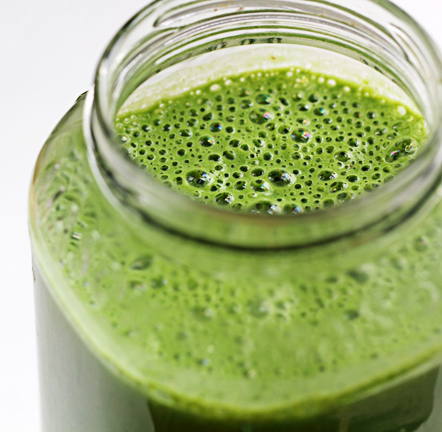
    If you are even 14 percent involved or interested in the world of health, nutrition, and wellness, you probably have heard that drinking smoothies is good for your health. No, I’m not talking about a Wendy’s frosty (omg yum but gross simultaneously). I’m talking about the green concoction many health-savvy folks devour daily in an effort to maximize nutrient intake, get their ‘greens’ in, add healthy fats, maintain weight, and fuel up pre or post workout. Well, I have some news for you: smoothies may not be as wholesome as you think. Don’t listen to everything you hear.

    As a yogi, health coach, and ex-rawfoodist, I can tell you first hand that FOR ME green smoothies don’t work. Now, don’t get me wrong. I still consume them occasionally because I like g-smoothiethem. And P.S. having some of what you really enjoy won’t kill you (there are some exceptions, but I’ll save that for a later post). When I say smoothies don’t work for me, I simply mean they don’t work for me right now. Depending on many factors, certain foods may serve us at certain points in our lives. Our bodies are always changing, and our diets should be too.

    A few months ago, I was talking with a friend of mine (fellow health coach) about how I was feeling ungrounded. It was a very odd and unusual feeling. I told him I sometimes feel like everything in life is going at 100 mph and I just can’t keep up. I described that I often feel hyper sensitive, to the extent that it can become difficult to interact in groups and at large events. After listening to me rant, he asked me one question: “What are you eating?”

    Huh? What am I eating? Did you hear me? I’m telling you about how I feel in my life, and your advice is to ask me what I’m eating? How could that possibly be related?

    Reluctantly, I told him my typical daily intake. I happened to be especially proud to tell him all of the magnificent ingredients that go into my superfood smoothie every morning: coconut water, chia seeds, blueberries, spirulina, almond butter, bananas, kale, spinach, and hemp seeds.

    Apparently, my concoction proved not so thrilling when he immediately demanded I stop consuming it. I was baffled beyond belief and attempted to combat his abrupt decision. He suggested that I stop drinking my smoothie for one week to see how I feel. Since that time, I have had maybe one smoothie, and overall, I feel so much more grounded, relaxed, and focused. Call it placebo, or try for yourself.

    The reason drinking smoothies can be obstructive to some peoples’ health depends on many factors. In my case, I do not process many raw foods well. I am a light person by nature, and too many raw foods only make my energy lighter and are difficult to digest. In order to get work done, establish solid relationships, and be fully present in my body, concentrate, and focus, cooked foods, soups, stews, and protein work best for me. Eating warm food makes me feel more grounded, and ultimately, more healthy.

    Regardless of the way you handle certain foods, it’s important to learn more about why you make the choices you make for your health. Do you know why you do what you do, or do you simply follow the crowd because it sounds good?

    Don’t let smoothies deceive you. Learn the secret lives of smoothies:

    1. Usually smoothies contain way too much sugar. 

    Would you really eat three apples and a banana in one sitting? Even if you add a handful of spinach to your smoothie, you might as well eat a spinach salad or sauté some spinach and skip the fruit. Sugar makes you fat and can lead to diseases. Yes, even fruit.

    2. Smoothies may be poorly combined.

    Even a totally organic, raw food, vegan superfood smoothie can be detrimental to your health if there’s ‘too much going on’. Yes, smoothies can be easier on digestion, but depending on what’s in it, your body can have a difficult time processing the ingredients. For example, fruit digests much quicker than nuts, so if you add almond butter to your smoothie, the fruit may get backed up in your colon and cause fermentation and yeast. Again, these are general possibilities, and I know many people who feel great drinking smoothies on a daily basis. This may be you, and that’s wonderful. I am talking to those of you who drink smoothies because you think they’re good for you, but you probably wouldn’t drink them otherwise and/or you experience some of the physical side effects.

    3. Raw spinach interferes with absorption of calcium.

    Certain raw vegetables contain oxalic acid, which inhibits calcium absorption. Due to this interesting fact, it is actually healthier to lightly cook certain vegetables than eat them raw. Oxalic acid is broken down during the cooking process while many other nutrients are retained. Some vegetables containing oxalic acid include spinach, beet greens, and Swiss chard.

    4. Dairy is one of the highest known allergen foods.

    If you are still putting yogurt in your smoothies, please stop. Not only is it SO ten years ago, but it’s totally not necessary and not healthy. I’m not saying all dairy is bad and should be avoided, but if you’re going to indulge in dairy, just have a piece of cheese or something good at least. Or eat plain organic yogurt by itself. Not in your smoothie. It’s just silly. Dairy is known to cause mucus, congestion, acne, inflammation, and weight gain. It is difficult to digest for many people, and people tend to overlook the close association between dairy and physical reactions. If you’re craving creaminess in your smoothie, add some homemade hemp milk or almond milk.

    5. Protein powders? There is no ‘powder tree’.

    One of my favorite quotes by author and nutrition enthusiast Michael Pollan: “If it comes from a plant, eat it. If it was made in a plant, don’t.” Ahhhh… music to my ears. I don’t care how many grams of protein or how organic or how ‘whole’ it is, powder is processed. It does not exist in nature, and regardless, our bodies aren’t capable of breaking down that much protein at once… especially when you’re guzzling it in a short amount of time. And I’m referring to vegan protein powders here… don’t even get me started on WHEY… NO WAY, WHEY! Hemp and chia seeds contain plenty of protein. You don’t need to add more to your smoothie. Eat an egg.

    6. It’s too much at once.

    Unless you have enough self-discipline to ‘chew’ your smoothie, chances are that BPA-free smoothie mug of yours will be empty in less than 5 minutes. The truth is, you SHOULD chew your smoothie. Reminder: A smoothie is a bunch of foods blended together, and while blending does make it easier on the digestive stem, chewing is what initiates digestion. A smoothie is not a drink. It’s food that looks like a drink. Without chewing, the body may not release necessary ‘pre-digestive’ enzymes. Remember, digestion starts in the mouth. When consuming a smoothie, swish it around your mouth and get your digestive juices flowing.