Category: Uncategorized

  • The Insecure 2.0 Act?

    The Insecure 2.0 Act?

    On December 20th, 2019, former President Donald Trump signed the Further Consolidated Appropriations Act, which included the SECURE (Setting Every Community Up for Retirement Enhancement) Act of 2019.  SECURE 2019 made changes that applied to retirement savings and employee benefits. 

    Prior to SECURE, when individuals reached age 70.5, they were required to begin taking annual distributions (starting roughly at 5% of the account balance) known as RMDs (Required Minimum Distributions) from their IRAs (Individual Retirement Accounts).  RMDs are based on age (mortality) meaning a 70-year-old must take 5% and the percentage goes up every year as life expectancy goes down.  At 80 years old, the distribution must be 10% of the account, and so on.

    Under SECURE 2019, the age for one to begin taking RMDs has increased from age 70.5 to age 72.  Increasing the RMD age allows retirement funds to continue to grow tax-deferred for a longer period of time.  This applied to Americans who turned 70.5 after December 31st, 2019, and those who have a 401(K), 401(A), 403(B), government 457(B), and or a traditional IRA. 

    Whenever a new bill is passed that seems to benefit the public, I usually like to analyze and understand the opposite point of view, meaning how does the government benefit by allowing the public to grow our IRA, etc. for 2 more years from age 70 to 72?  It is clear to me that our government wants us to save more money for our own retirement, so we don’t go broke and be forced to depend on government-funded Medicaid funds for medical expenditures.

    The insurance industry is not much different.  As an independent insurance advisor/broker, I/my firm represents YOU, the client, and we research over 100 insurance companies tracking over 2000 products to shop the market to find the best available products at the best prices for YOU, the client, to choose from.  We often find “pricing sweet spots” where one insurance carrier might be much less expensive that the others in a particular age bracket.  Insurance companies are often releasing new products and sometimes discontinue old/previous products.  When insurance companies discontinue one of their product offerings, we know that the product was “TOO Good” for the client and not priced high enough, meaning it is/was not profitable enough for the company. 

    While the SECURE Act of 2019 helped seniors save for retirement with IRAs and other “qualified ‘pretax’ accounts,” there were subtle changes that have hurt estate planning, meaning the process of passing down assets to our children and grandchildren by deferring or avoiding taxation.

    The biggest rule change was the introduction of the 10-year rule!  Prior to the 2019 SECURE Act, if you had an IRA account that you left to your children, those children (beneficiaries) were able to stretch (we called this the Stretch IRA) the IRA distributions out over their lifetimes. Now, they must withdraw 100% of the account by the 10th year of their parent’s death!

    Let me repeat these changes below and what it means to your family:

    1. The Inherited IRA Account Must Be Depleted Within 10 Years! 
    2. No IRA Money Left for Grandchildren (assuming children live for 10 years and receive ALL of the proceeds, which are 100% taxable).
    3. Inherited TRUSTS That Need to be Reviewed:  Inherited IRA accounts “In Trust,” now need to be FULLY PAID OUT by the 10th anniversary of the IRA holder’s death.  These trusts need to be looked at and possibly rewritten!

    The SECURE Act of 2019 seems to be one of the few issues that former President Trump and current President Biden somewhat agree on.  If Biden didn’t agree, he would have tried to repeal the SECURE Act of 2019 instead of adding to it. 

    The SECURE Act 2.0 was quietly signed into law by President Joe Biden on December 29th, 2022, as part of the Consolidated Appropriations Act of 2023.  The SECURE Act 2.0 adds many additional enhancement provisions to the SECURE Act of 2019. 

    Some of the new changes include:

    1. Increase in Age for RMD Distributions: The new required age to start making taxable withdrawals moved from age 72 to age 73, which increases to age 75 after December 31st, 2032. 
    2. IRA Catch-Up Contributions Indexed for Inflation:  Beginning in 2024, IRA catch-up contributions will be indexed for inflation. 
    3. Penalty-Free Withdrawal Exceptions from Retirement Plans: Terminal Illness.  If an individual is diagnosed with a terminal illness (expected to live less than 84 months) there will be no premature distribution penalty. 
    4. Higher Employer Retirement Plan Catch-Up Limits:  Effective in 2023, retirement plan catch-up contributions rise to $7,500 for those aged 50 and higher. 
    5. Rollovers of Long-Term 529 Plans to Roth IRAs: Effective in 2024, for eligible 529 plans, (must have been open for at least 15 years) up to $35,000 (per beneficiary) can be rolled over into Roth IRAs.  

                The SECURE and SECURE 2.0 Acts are important rule changes to be aware of and planned for.  Individual tax returns are due on Tuesday, April 18th (the 15th is on a Sunday).  This is a critical time to huddle with your CPA and other advisors to see how you can take advantage of the positive retirement rule changes. 

  • Summer Camps, “It’s Getting Late, Early!”

    Summer Camps, “It’s Getting Late, Early!”

    Since it is now Springtime and baseball season has commenced, I will quote the great Yogi Berra. If you are planning on sending your child(ren) to summer camp this year, “it’s getting late, early!”

    Summer Camps have been around for over 100 years! I have fond memories of growing up in Rockaway and loving the beach in the summer. We had a Belle Harbor beach house (now in the Atlantic Ocean) and people visited us from near and far. Because we didn’t want to leave the beach and our friends, we often decided to go to Summer Camp for 1 month instead of the whole summer. I remember going to basketball camp at KSA (Kutcher’s Sports Academy) and hanging out with my friends at the more social Kutcher’s Camp Anawana, across the lake. There is no doubt some of the best friendships in life begin at camp!  

    I reached out and interviewed my longtime friend Ken Barer (KB), Co-owner of Mohawk Day Camp in White Plains, to get the scoop on what’s going on with camp this year. It turns out he was in France, showing his daughter around town, from when he played pro basketball there. We spoke via WhatsApp. You have got to Love technology as we used to buy “phone cards” to call long distances outside the USA back in our summer camp days. 

    KB said, “We are 100% full and we filled up the earliest in our history. I think there was plenty of isolation and pent-up anxieties during Covid-19, and kids are really looking forward to reconnecting and relearning how to socialize, and camp is the best place to do it!” 

    KB then sent me a link to a New York Post column from February about a mother whose child received a “Camp Rejection Letter” from a Poconos summer camp that her 8-year-old was really looking forward to attending.  The letter said, “due to unexpected and unprecedented demand, we, unfortunately, cannot offer your child a bunk spot.” This was after she had promised her daughter, she was going to camp where 5 of her friends were attending.

    In order to prevent this from happening to your child(ren), see below for tips on how to begin your summer camp search:

    1.   Do NOT Wait: If you have plans for your child(ren) to attend a summer camp this year, it’s time to get on it and take action now!

    2.   Assess Your Child First: It’s important to have a handle on your child before matching them up with a camp. Ask yourself the following questions.  Are they introverted or extroverted? Better in small or large group settings? Do they enjoy sports or perhaps theatre and the arts? Any special meal or diet considerations? Day camp or sleepaway?

    3.   Word of Mouth: Ask friends and parents of your child’s friends where they are going and why.

    4.   Talk to the Camp Leaders and Director: Even a year early is not too early to reach out to the camp leaders as it is important to have a working relationship with those in charge.

    5.   Search Online: Checking out a camp’s website and social media reviews is a good place to start. A website for New York City, Long Island, and Westchester Camp Fairs is www.NewYorkFamily.com/camp-fairs

    6.   Camp Fairs: At Camp Fairs, families can walk around from table to table to make apples-to-apples comparisons. It is a good idea to have pre-written questions, and Camp Fairs allow for the efficiency of meeting multiple camp directors on the same day.

    7.   Camp Open Houses: Many day camps and overnight camps offer open houses in the spring and fall so families can have a chance to visit the camp ahead of making important decisions. During the open house, the camp will usually run activities for families giving them a chance to walk around and get a “vibe” from the camp. Similar to college campuses, sometimes there is a “feel” on the campus if it is going to be a good fit or not a good fit, so seeing the actual campus is critical.

    8.   Call the American Camp Association, New York and New Jersey: The NY and NJ ACA, offers parents “free services” including one on one advice to help your search. The contact person is Renee Flax at 212-391-5208 or email her at Renee@acanynj.org

    There is no question that doing the proper research to find the best fit for your child(ren) can pay off in the long run! There are camps for everyone and it’s important to choose one that has the activities your camper is looking for, as well as a camp you can be excited about. 

    In my experience, Camp allows children to discover who they are and uncover things they might be good at and are interested in. For me, I took up water skiing using “trick water skis,” which was pretty cool when we put on a show for the parents at Parent/Child weekend. Finding the right activities is also a good self-confidence builder and teaches campers teamwork and how to interact with kids from different backgrounds and nationalities. Other benefits of camp are it teaches independence and living in the moment and it helps develop relationships that could be lifelong. 

    Wishing you and your campers the best for a fantastic summer of fun and personal growth!

  • Every Day is Christmas in Antarctica!

    Every Day is Christmas in Antarctica!

    It was a much-needed 3 weeks off to disconnect and see Antarctica, the 7th of 7 continents that I had visited.  Did you miss me? 

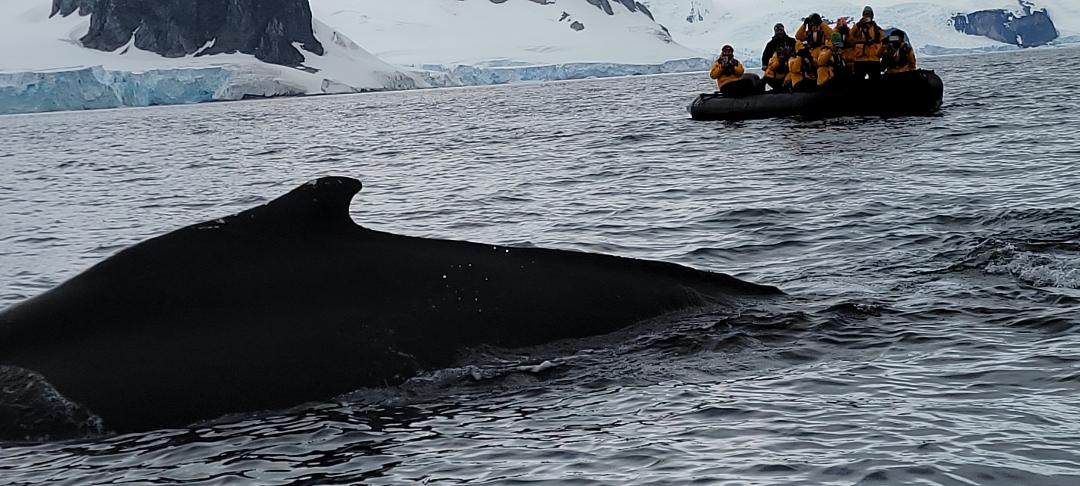
    This was a once-in-a-lifetime trip!  The reason I chose this title is that we were on these small rubber Zodiac boats (originally made for the military) and it was a scramble to take photos.  Upon our return to the cabin, we got to see how the pictures turned out,  kind of like unwrapping holiday presents.

    Antarctica is made up of the 7th continent and the region surrounding it.  The continent of Antarctica is the land mass at the bottom of the globe, right below the southern tips of South America (Cape Horn), Africa (Cape Town), and New Zealand.  It contains the geographic South Pole, is surrounded by the Southern (or Antarctic) Ocean, and is the coldest, driest, and windiest continent on earth! 

    The Southern Ocean has the roughest waters in the world called “The Drake Passage,” named after 16th-century English explorer Francis Drake.  The waters are rough because there is no land mass to break the waves.  They call it “The Drake Shake.”

    It took a total of 4 days to get there from JFK airport.  First, it was an 11-hour flight to Buenos Aires, Argentina.  The was followed by a 3.5-hour flight to Ushuaia, the southernmost city in the world.  Then it was a tough two days on board the Quark Expedition ship to get to Antarctica, the promised land!

    Antarctica is massive.  It measures 14.2 million square kilometers (5.5 million square miles) which makes it the size of the USA and Mexico combined.  It is twice the size of Australia.

    The Arctic is the area at the top of the globe where the North Pole is whilst Antarctica is at the bottom, in the south.  The other difference between the two is although both are vast areas of the ice, there is no land in the Arctic, it is all just frozen sea, while Antarctica has land beneath the ice.

    According to NASA, Antarctica has 90% of ALL the ice on Earth!  Known as “The White Continent,” in some areas the ice is 3 miles thick.  If it all melted, worldwide sea levels would rise by approximately 230 feet, which would wipe out humanity!

    No country owns Antarctica because it has no native population, so nobody has had a historic claim to it.  It is uninhabitable year-round as we checked the temperature in September, and it was negative 57 degrees Fahrenheit.  Their seasons are the opposite of ours, so this is the end of their summer.  It is the most unique continent as it has no cities, towns, roads, building,s or commercial industries.  The only buildings or settlements on the continent are the 70 scientific research bases belonging to 30 different countries.  Many of those are only accessible by plane or by long motor convoy journeys across the ice. 

    There is no doubt this was a trip of a lifetime for me!  We had daily briefings from a marine biologist, ornithologist (bird expert), geologist, and historian and briefings and daily recaps from Shane, the expedition leader.  It was like going back to college combined with a mind-blowing excursion. 

    The first question I am asked is, did you do the Polar Plunge?  Yes, I survived “The Polar Plunge” in 31-degree water!  I learned that salt water freezes at 28.4 degrees Fahrenheit.  They put a wet harness around us, and we jumped into the frigid water.  My feet immediately went numb and I had to look down to see if I was standing on the ship’s metal stairs because I couldn’t feel anything.  On the way up the stairs, they give you a “Polar Plunge” patch, throw a towel around you, and a double shot of vodka before it is time for a hot shower.  There is something about this and the spas’ ice baths because that night was the best I had felt all trip.  This was a physically and mentally taxing journey, not for everyone.

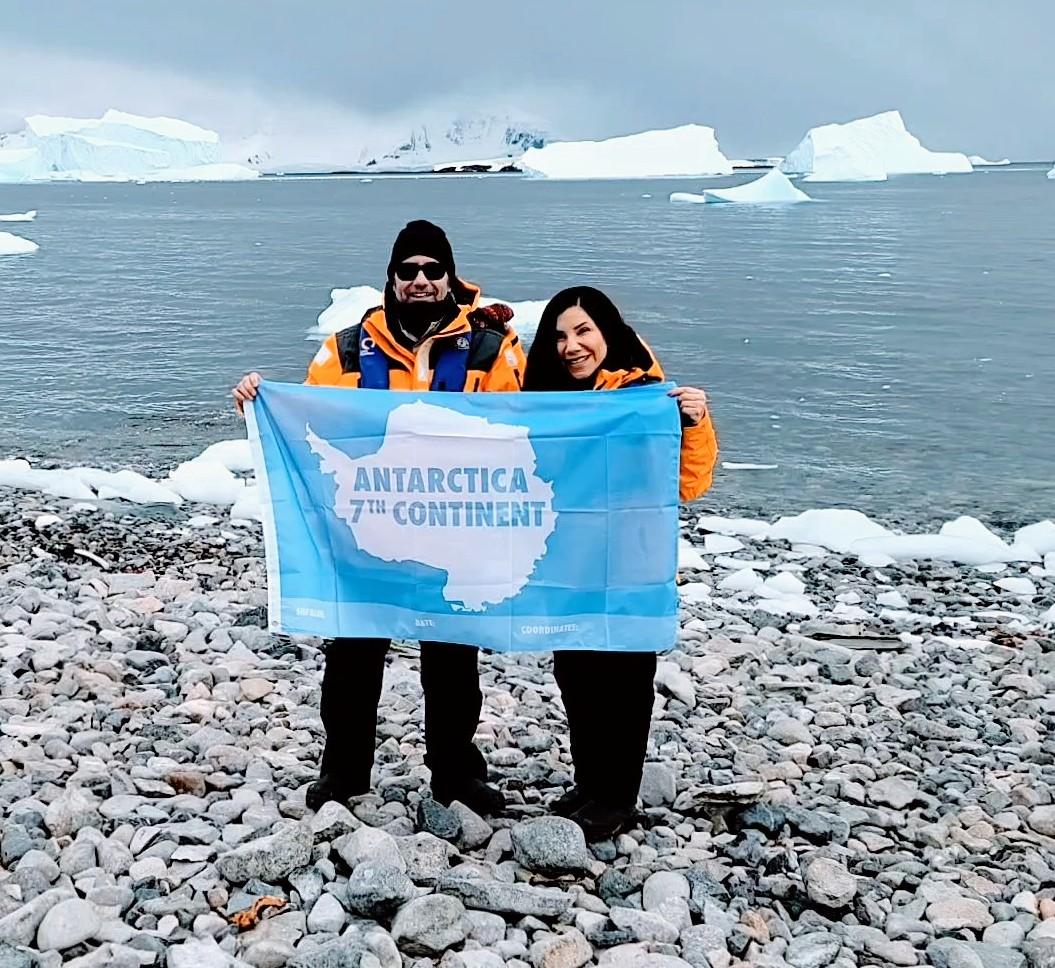
    Before this trip, I thought I had a decent knowledge of travel; however, this was next level.  I went on this expedition with long-time Rockaway resident and fellow adventurer, Josephine Romano (pictured).  Fortunately (for me) she had been an aspiring travel agent; however, she smartly chose the stability of the court system over the volatility of being a travel agent.

    I learned the following ways to save money from Josephine:

    1. Plan in Advance: There are many deals to be had if one does extensive research well in advance.  We started planning this trip in 2021 when Covid-19 was going strong. 
    2. Shop Travel Agents:  We interviewed several high-end travel agents and Josephine found one who got us the best deal and she threw in $150 of ship store credits each. 
    3. Shop International Trip Health Insurance:  As an “Insurance Advisor,” my job is to assess risk and find the best value for my clients and transfer the bulk of that risk to an insurance company.  This is no different and she found the best deal for under $400 each.  This is the first time I had bought the coverage and it gave me peace of mind as there are no hospitals in Antarctica, and they must air lift you out of there if and when something serious happens.
    4. Use Frequent Flyer Miles:  Most airlines have changed their programs making miles less valuable.  This is the opposite of the first two years of Covid as they made qualifying for “Gold Status” easier because fewer persons were traveling.  I used a chunk of miles to save $2,500 for premium economy flights from JFK to Buenos Aires, the first of 3 legs and 4 days needed to get there.  If you have an iPhone, www.thepointsguy.com you can download their app and they convert miles to dollar values. 
    5. Do NOT Exchange Currency at JFK: They were offering 152 Argentine pesos per U.S. Dollar.  We found 320 for $1 at the Buenos Aires hotel the next day.
    6. Call Josephine Romano:  If all else fails, call Jo!

    I am not sure where to go from here as this was the apex of travel.  If you have any travel venue suggestions, feel free to email me at Rob@InsuranceDoctor.us.

  • 5 Valentine’s Day Money-Saving Tips

    About 53% of Americans had planned to celebrate Valentine’s Day in 2022!  According to the National Retail Federation (NRF), sales for Valentine’s Day this year are expected to be over $23.9 Billion, an increase of over $3.2 Billion from last year.

    The average person is planning on spending $175 on candy, cards, and gifts. Believe it or not, $763 million will be spent on pets, with an average of $25 on dogs and $21 on cats.

    Obviously, Valentine’s Day gifts can be expensive; however, they don’t have to be.  This day can also trigger a variety of emotions and angst, especially when relationships are on the rocks.  The truth is you don’t need to spend a ton of money to show your loved ones you care!

    The oldest record of a Valentine being sent according to History.com was a poem written by a French Medieval Duke named Charles to his wife in 1415.  Charles penned a sweet note to his lover while he was imprisoned in the Tower of London at 21 years of age. 

    During this Covid-19 era, ALL holidays are tricky.  Many times our family has had to move the dates of birthday parties, graduations, weddings, and other family and business gatherings during the past 3 years.  This Valentine’s Day is no different. 

    My top 5 Tips to save money on Valentine’s Day:

    1. Move the Date: This year, Valentine’s Day is on Tuesday the 14th.  This special day could be moved up and celebrated the weekend before on Friday or Saturday when restaurant prices are “normal.”  You could also move it back to Wednesday the 15th and save 75% by buying Valentine’s Day candy on Wednesday the 15th
    2. Book a Staycation: Celebrating with a romantic getaway can be expensive with hotels increasing their rates by 25% or more during Valentine’s Day week and weekend.  You can stay romantic and curb spending by booking a Staycation at a local hotel or cozy Airbnb.
    • Stay Home:  With supply-chain issues continuing to affect us to a degree, there are many creative things and ways for couples to celebrate without having to splurge on a $250 steak dinner for two.  A nice cozy night at home, cuddling in front of the TV watching a movie with a glass of wine, takeout (or cooking a romantic dinner together), and thoughtful hand-made personal gifts can go a long way to fortifying your relationship!  
    • Shop Online for Flowers: If you do not have the time to shop at your local florists, you might want to consider shopping online or at Costco or Aldi’s, who have specials on flowers days in advance of Valentine’s Day.  Online retailers, such as 1-800-Flowers, FTD, and ProFlowers give you the chance to compare prices on bouquets and a variety of types of flowers. Another option is to buy flowers other than roses.    Do Not buy anything online without first searching for online coupons or coupon codes for as much as 20%-50% off on flowers and arrangements.  Try www.Groupon.com or your favorite online coupon site. 
    • Stay Single: For singles, Valentine’s Day can be just a regular day or perhaps a day where you TREAT YOURSELF to something special.  Spending your gift cards is a good way to treat yourself and save money.

    If all else fails, the personal touch of a nice card with a handwritten love note added to a gift card, and some personal time walking in the park or where you have had positive experiences can work just as well. 

    Are you doing anything out of the ordinary for Valentine’s Day?  Let me know at Rob@Insurancedoctor.us.

  • Natural Disasters = Higher Premiums

    We are certainly living in unique times of record-setting weather-related climate-change catastrophes.  Currently, we are close to setting the record for the latest snowfall in New York City history! 

    I saw an example of this firsthand back in January 2020 when I visited Australia.  Before diving in Cairns, the guide showed us pictures of the Great Barrier Reef coral sea bottom today and 10 years ago, and there were stark differences.  You could see the sad erosion of the beautiful coral over the past decade. 

    The year 2022 was one of the most tumultuous climate disaster years in history, a year when we saw the massively destructive Hurricane Ian, an unprecedented number of tornadoes, growing wildfires in the West, and a “bomb cyclone” in late December.  The increasing number of natural disasters is not just a U.S. phenomenon as it is happening around the world.

    The increasing frequency and intensity of these natural disasters in the United States, combined with soaring inflation, supply chain issues, and labor shortages are having a drastic effect on homeowner’s insurance premiums.

    In the first 9 months of 2022 alone there were 15 separate billion-dollar weather and climate disasters:

    • Southern tornadoes: March 30
    • Southeastern tornadoes: April 4-6
    • Severe weather in the South: April 11-13
    • Western fires: Spring through fall
    • Severe weather in the South and Central U.S.: May 1-3
    • Hailstorms in north-central U.S.: May 9
    • Severe weather in the north-central U.S.: May 11-12
    • Hailstorms in north-central U.S.: May 19
    • Severe weather in Central U.S.: June 7-8
    • Central Derecho (an inland hurricane): June 13
    • Severe weather in north-central and Eastern U.S.: July 22-24
    • Flooding in Kentucky and Missouri: July 26-28
    • Hurricane Fiona: Sept. 17-18
    • Hurricane Ian: Sept. 28-30
    • Western drought and heatwave: All year

    This past December, we had the Christmas bomb cyclone (known as Winter Storm Elliot) that threw a blanket of arctic freeze across large swaths of the country, causing an estimated $5.4 billion in insured losses in 42 states, according to Karen Clark & Co.

    There are a few things to note about the list of calamities:

    1. You will notice that some of these events were “severe weather” that didn’t qualify as a hurricane. These severe weather events are starting to have as much destructive force as the primary perils.
    2. Much of the weather the U.S. is experiencing is more intensive and far-reaching than before. The nature of hurricanes is also changing: these storms have typically caused wind and storm-surge damage, but as they grow wetter, they are now causing more rain and flood damage on top of the other damage.
    3. Hurricanes are bringing flooding far beyond the coasts and into the central parts of states, such as in Florida and the Carolinas, according to the Swiss Re report.
    4. Drought is also a serious issue, particularly in how it affects wildfires and water supplies. Years of low rainfall and overuse have left the Colorado River a shadow of its former self, resulting in record low levels in Lake Mead and Lake Powell, the sites of two main dams that may soon stop producing water and electricity for millions of people.
    5. According to the Sept. 27, 2022 “U.S. Drought Monitor” report, about 51% of the contiguous U.S. was in drought, up about 5.4% from the end of August. Drought conditions expanded or intensified across portions of the Mississippi Valley, central and northern Plains, Northwest, Southeast and parts of the Great Lakes.

    As per Time Magazine’s website www.Time.com, a massive hurricane, drought, and 15 other natural disasters across the USA collectively racked up $165 billion in damages and killed at least 474 people in 2022. 

    According to NOAA, (National Oceanic and Atmospheric Administration) 2022 was our nation’s third most expensive year for billion-dollar disasters following 2017 ($373.2 billion) and 2005 ($253.5 billion) based on NOAA’s metrics.

    Hurricane Ian was the year’s costliest catastrophe and the second-largest insured loss on record after Hurricane Katrina.  These events, plus the cost of repairing and rebuilding buildings and infrastructure are also on the rise thanks to increasing material and labor costs.  These factors are having a major effect on homeowners’ insurance.

    Homeowner insurance rates rose 12.1% on average nationwide in 2022 from the year prior; however, people living in disaster-prone areas are seeing much higher rates. In the case of Florida and California, many homeowners are unable to find insurance for their homes or face two, three or four-fold increases in their rates.

    You might be asking yourself what this all means.  It means homeowners should be shopping home and flood insurance rates every year.  It also means, before buying a new home, extra research needs to be done on homeowners and flood rates as well as surveys on elevation!  I was amazed to find out after Superstorm Sandy that the elevation on one side of the beach block on 137th street in Belle Harbor was 6 feet higher than the other side of the block.

    Feel free to reach out to me for competitive home and flood quotes at Rob@InsuranceDoctor.us.

  • The Dark Side of Chocolate

    The Dark Side of Chocolate

    We are in mid-January, still the time for New Year’s resolutions which are often health and fitness oriented.  Common resolutions are going to the gym X times per week and/or eating better.  My resolution is to drink more water, so I fill up 6 cups of water 24 ounces each in the morning and see how close I can get to finish them all by the end of the day. 

    Often, by the end of January, New Year’s resolution gym members wane.  I was reminded of this while watching a Peloton commercial during NFL games this Sunday.  Usually, I DVR (Digital Video Record) sporting events and watch them later without commercials; however, when I saw the new Peloton commercial, I decided to watch it.  I got a chuckle as they made fun of themselves by saying most exercise bikes become “coat racks” by February 1st, but NOT Peloton who boasts a 92% persistency rate. 

    What is your New Year’s resolution?  If it is to improve your diet, see below as this column is for you! 

    For years there were reports that dark chocolate is healthier than milk or white chocolate and some doctors went as far as saying one could eat a small piece of dark chocolate every day and be healthy.

    A new report from Consumer Reports blows the “dark chocolate is healthy” theory to smithereens!  I am not happy to write about this as I admit to being a “chocoholic!”

    According to market research firm Mintel, their survey reveals that about 15% of Americans eat chocolate every day.   Consumer Reports tested most of the popular brands of dark chocolate and found dangerous levels of lead and cadmium in most of them!  

    For many of us, chocolate is more than just a tasty treat.  It’s a reward after a tough day, a mood enhancer, an energy booster, and a popular gift, especially with Valentine’s Day right around the corner.  Many like myself, switched to dark chocolate for health benefits as it was reported to be high in antioxidants, good for your heart, and lower in sugar than milk and white chocolate.  

    There is also a “Dark Side” to the healthier chocolate theory.  Research has found that most dark chocolate bars contain high levels of cadmium and lead, two metals associated with numerous health problems in children and adults.  Apparently, the chocolate industry has been grappling with how to lower these high levels of heavy metals.  I’m all for heavy metal on the radio; however, I don’t want any in my chocolate!

    Their studies reported that while most of the bars they tested had high levels of cadmium and lead, there were only 5 bars tested that had low levels of each. So at least we know it is still possible to produce fairly healthy dark chocolate low in metals.

    According to “Chocolate Store,” Americans consume 2.8 billion pounds of chocolate each year, which averages out to 11 pounds per person.  Milk chocolate accounts for about 80% of all the chocolate that Americans consume daily.  Consumers spend more than $7 billion per year on chocolate!  Only white chocolate contains no caffeine; however, it has the highest levels of sugar and fat!

    Chocolate is made from the cacao bean, which has two major components, cocoa solids, and cocoa butter.  Together, they are called cacao or cocoa butter.  Cacao is packed with flavanols, which are antioxidants linked to reduced inflammation, improved blood vessel functions, and lower cholesterol.     

    Consumer Reports mentioned only 5 bars out of the 28 tested that passed muster.  They tested a variety of types of chocolate, brands, and different company sizes.  The only 5 were 1 each from companies called Mast, Taza, Vlarhona, and 2 bars from Ghirardelli (their 72% and 86% cacao bars). 

    Some bars that tested dangerously high above acceptable levels in heavy metals include but are not limited to:

    1.  Trader Joe’s (85% cacao) Chocolate lovers: Lead- 127% and Cadmium 229%
    2. Theo organic (85% cacao) extra dark: Lead- 140% and cadmium 189%
    3. Godiva (72% cacao) signature dark: Lead- 146% and cadmium 25%
    4. Hershey’s special dark mildly sweet: Lead- 265% and cadmium 30%
    5. Dove (70% cacao) promises deeper dark: Lead- 74% cadmium 112%

    Scientists are still trying to figure out how heavy metals are creeping into cacao.  In general, the darker the chocolate (higher levels of cacao) the higher the level of metals.  They suggest eating dark chocolate in moderation and trying those with lower cacao percentages.  Stay tuned!

  • The TV Wars: Cable vs Streaming

    Television has been around for a long time!  Kids today get a chuckle when they see the bulky old-school TVs with 2 antennas known as “rabbit ears,” and black and white TV. 

    Electronic television was first demonstrated by American Philo Farnsworth, known as “The Father of Television,” in San Francisco on September 7th, 1927.  The 21-year-old inventor lived in a house with no electricity until he was 14.

    In 2021, American Cable and pay TV providers generated total revenue of approximately $93 billion, up from $86.3 billion in 2020!  Advertising revenues have become mind-boggling during major events, such as the Super Bowl when it costs millions to run a 30 or 60-second ad.

    We are now in the Covid-19 era which has expedited the great unbundling of Television!  Because so many of us are now working from home, internet-based streaming services like Netflix, HBO Max, and YouTube TV have become more popular. 

    As the great Yogi Berra used to say, “When you come to a fork in the road, take it!”  What I mean by that is, when trying to decide among the many video services, it is likely you will come to a point of making a decision between cable television versus the various streaming services!

    While both cable TV and video streaming services provide the same result (entertaining video on your screen), the way they do so is vastly different.  Cable providers broadcast video content along their dedicated networks and have long-standing relationships with content providers.  Streaming providers on the other hand are newcomers to the video market, and they aren’t bound by the same rules.  They can offer their services nationwide, and you can use their services with a variety of electronic devices. 

    In the early days of Television, it was common for families to have dinner together at 7 pm and be seated in front of the living room Television for the 8 pm movie special on network TV.  Today, with the advent of the DVR (digital video recorder) and streaming video on phones and tablets, it is more common for everyone to do their own thing after dinner. 

    The best way to compare these two different methods of delivering video entertainment is by using a chart.  See below:

    Cable Streaming
    Picture quality Excellent HD No control, based on internet
    Content available Hundreds of channels Fewer channels
    Choices available Few cable monopolies Many streaming combinations
    Ease of use Need set-up box Used by any internet device
    Price More expensive Less pricey can mix and match
    Extra costs Set-up box & DVR Premium channels for add-ons
    Discounts If you add net/phone Can password share to save money
    Contracts Usually 1-year contract No contracts, month to month
    Portability Phone app Anywhere you have internet access

    You are probably asking yourself, which video service is better?  The answer is it depends!  If your family lives in a low-quality internet area and/or there are many family members watching different programs at the same time, stick with the traditional cable TV package.  It is frustrating in poor internet areas to have your TV constantly buffering.

    That being said, there is little to lose by trying streaming services.  There is no extra equipment to buy and if you don’t like the services you are getting, you can cancel it at the end of 30 days or try a different provider. 

    Should you not like streaming services after a few months, usually you can switch back to cable and get their discounted introductory subscriber rates.  Like many banks and insurance companies, cable providers will offer new customers lower prices than their existing subscribers.  This is why it is usually worth a face-to-face visit to your local cable provider store once per year to shop your package and pricing.  Good luck with whichever choice you make!

  • Interest Rates- Good vs Evil?

    Interest rates make the financial world go around!  These are unique times as interest rates have doubled this calendar year. 

    As a youngster, did you ever throw a rock into a lake to see how the ripples get wider and wider until you can no longer see them?  This is what happens with interest rate changes as their ripple effects run further and wider than the eye can see. 

    The Federal Open Market Committee, or FOMC, is the Federal Reserve’s monetary policymaking body.  It is responsible for the formulation of a policy designed to promote stable prices and economic growth.  Simply put, the FOMC manages the nation’s money supply!  The Federal Open Market Committee (FOMC) holds eight regularly scheduled meetings (usually every six weeks) during the year. 

    When the Federal Reserve raises interest rates, this increase influences almost all the borrowing costs throughout the economy. 

    The Good News is:

    1. Bank savings accounts, money markets, and CDs (Certificates of Deposit where interest is taxable) will pay a higher interest rate, however,  it is taxable whether funds are withdrawn or not.
    2. Fixed Annuities (Issued by Insurance Companies that can return 1% higher than bank CDs) will pay a higher interest rate that is tax-deferred.

    The Bad News is:

    1. The cost to borrow money has been skyrocketing.
    2. This has triggered major increases in mortgage rates, some student loans, and worst of all, credit card interest rates.  For those who do NOT pay off monthly credit card charges, in some cases interest rates now exceed 30%!

    According to the Federal Reserve Bank of New York, the total U.S. credit card debt has reached an astronomical $930 billion!  Households have increased debt at the fastest pace seen in 15 years due to hefty increases in credit card usage and mortgage balances.

    I recently had 2 clients with credit card interest rate issues where it made sense to advise them to cash out their existing expensive whole life insurance policies, replacing them with inexpensive term insurance policies, and using a portion of the influx of cash to pay off their existing credit card debt.

    If ever there was a time to take action, it is NOW! For those in a similar credit card balance carryover situation, doing nothing and drowning in debt with your monthly minimums increasing can be financially disastrous.

    My Lucky 7 suggestions for those that are feeling the credit card rate increase crunch in the short term:

    1. Have Holiday Spending Limits: Have a maximum dollar amount you are willing to spend per person. STOP when you hit your spending limit!
    2. Consider a Secret Santa Type strategy: For those that celebrate Christmas, a “Secret Santa” means your family picks 1 person (out of a hat) for whom to buy presents with a pre-set spending limit/cap.
    3. Try Using Gift Cards: This way, when the money is gone, it’s gone!
    4. Avoid Retail Discount Credit Cards:  When you are at the retail counter, that new store credit card looks great because you get an additional discount on the item you are purchasing.  Those savings can get eaten up tenfold by paying 30+% interest on that store credit card balance the following month(s).
    5. Consider Debt Consolidation Programs:  There are banks and other lending institutions that have “loan consolidation programs.”  This allows you to combine your debt and lock in a lower interest rate to help you pay down the balance.
    6. Negotiate: There are banks that will allow you to negotiate debt and/or freeze a card until it is paid down to zero.  Crying poverty can work. 
    7. Curtail Your Spending:  If you cannot pay off the item in full within 30 days, don’t buy it!

    Individuals feeling the “credit interest rate crunch” are not alone.  This is happening on a macro level as there is a looming default risk crisis internationally.  There are small poor nations that owe big $$$$ to big nations.  The perfect storm of rapid inflation, slowing growth, a stronger dollar, and rapidly rising interest rates have some nations teetering on bankruptcy.

    To give you an example, Sri Lanka’s Central Bank negotiated a “barter deal” to pay for Iranian oil with tea leaves! 

    There is a saying that I always liked, “Action Diffuses Anxiety!”  If you are in this situation, take action and you will start feeling better almost immediately.  Doing nothing and “kicking the can down the road” will only exacerbate the problem later!

  • 4 Holiday Scams to Avoid

    During the Holiday Season, there are often mixed emotions.  There is the joy of gathering with loved ones, some of whom you only see once or twice per year.  There is also the anticipation of sharing stories, jokes, and gifts.  It is a time of reflection when we look at what transpired this past year.

    Unfortunately, cyber-criminals also look forward to this holiday season unleashing their scams on us while we are distracted during the holidays, office parties, family vacations, year-end planning, etc.  They particularly target vulnerable seniors.

    Be aware of these 4 common holiday scams to protect yourself and your family this holiday season:

    1. Package Delivery Scams:  Last season, an estimated three billion packages were shipped.  It was just reported that in 2020, Amazon has surpassed FedEx in packages delivered.  Amazon shipped 4.2 billion compared to 3.3 billion for FedEx.  It is easy to spot an Amazon box from afar.  A popular scam is receiving a text or email that asks you to click on a link for bogus reasons, such as a delivery update, tracking a package, or giving your payment preferences.  Clicking that link can infect your phone and/or computer with malware that enables a cyber-criminal to capture your password or take control of your computer.  Sometimes, they give you a number and use fake call centers to sweet-talk you into giving them your credit card number.
    2. Missed Package Scams: It is annoying to miss a package delivery, especially when the gift is needed now.  Cyber-criminals know this and prey on this frustration and urgency.  One of their scams is to leave a phony note on your door claiming to have your package that could not be delivered.  This note often contains a phone number to call and reschedule the delivery and now we are back to scam #1, when they finesse your personal information.  It is also popular for thieves to just walk up to your home and take that box from your porch.  This happens so frequently, that they are referred to as “Porch Pirates!”
    3. Gift Card Scams: A common gift card scam involves receiving a phony or “phishing” email or text that seems to be from someone you know.  It can also be a personal request from a friend or relative who claims to need help ordering gift cards.
    4. Social Media Scams: During this holiday season, you might see promotions on social media sites offering vouchers, prizes, or gift cards in exchange for completing an online survey.  This is usually a fake survey to entice you to give them your personal information. 

    Cybercrime is so prevalent these days, the odds are good that you or someone you know has been hacked. A few years ago, my visa card was hacked three times in under two years.  My Facebook account was also compromised, and I was wondering why until friends of mine were asking why I needed money while on vacation.

    See my list of preventable measures to avoid being scammed, so we can all enjoy the holidays while reducing stress:

    1. Download the Delivery Apps: Whichever delivery service you prefer, download their secured app which gives you scam protection.
    2. Cross Reference Phone Numbers: If you receive a missed delivery note, look up the phone number online before rushing to make that call.
    3. Check the Note:  If you receive a sticky note on your door, take a close look at it for misspellings, fake logos, or other suspicious signs of fraud.
    4. Check Websites Before Clicking on Them: Type the website address directly into your browser because search links could direct you straight into their scam.
    5. Consider Adding a Security System: These systems come in a variety of styles and prices.  They allow you to observe outside your front door from your phone or computer.  An interesting system is the “Reolink Argus 2!’  This wireless system uses solar energy to recharge itself.  I have seen price ranges from $73.99 on Walmart.com to $119.69 on the Reolink.com website.

    The bottom line is that we cannot eliminate scams or scammers; however, we can be more aware of them and avoid them. 

    Wishing you and your family the Happiest of Holiday Seasons and Good Health!!

  • Black Friday is here!

    Black Friday is Here!  Or is it?  These days it seems like it is more of “Black Friday Month!”  You see ads on TV, hear them on the radio, and get bombarded with a flood of Black Friday emails throughout November leading into the holidays.

    You might be asking yourself, where did “Black Friday” come from and why has it become such a big deal?  Its dark origin might surprise you.  As per History.com, the first recorded use of the term “Black Friday” was to describe a financial crisis.  The U.S. gold market crashed on Friday, September 24th, 1869!  This crash paralyzed the U.S. economy for years.

    Jay Gould and Jim Fisk, two ruthless Wall Street financiers colluded to buy up as much gold as possible to push up the price then sell it at a mega profit.  On that infamous September Friday, their conspiracy unraveled sending the markets crashing and bankrupting everyone from farmers to Wall Street tycoons.

    In the 1950s, factory managers first referred to the Friday after Thanksgiving as “Black Friday” as their workers falsely decided to call in sick to extend the holiday weekend! 

    There are those that believe “Black Friday” originated in Philadelphia in the early 1960s.  Police griped about the congested traffic on the way to the Army-Navy football game and looking for deals after Thanksgiving. It was changed to “Big Friday” to be more positive; however, the rebranding didn’t stick.

    The most common retail definition of “Black Friday” came to be in the late 1980s.  This refers to the post-Thanksgiving shopping season kickoff.  As the retail story goes, after an entire calendar year of operating at a loss (in the red) retail stores would start to earn a profit (in the black) when doing their accounting. 

    “Black Friday” started as one day, then it expanded to four days, a week, and now it’s a month-long shopper’s bonanza as well as a global phenomenon!

    Here are my Money Saving Tips:

    For the retail Brick and Mortar Shoppers:  As per the “Krazy Coupon Lady” the best place to buy:

    Small Kitchen Appliances: Such as cookers, toasters, and coffee machines;

    Kohl’s using “Kohl’s Cash.”  Spend $50 and get $15 Kohl’s cash up to November 25th, with no limit.  Use coupon code ENJOY15 for 15% off.  2nd place: Macy’s.

    Flat Screen TV’s: Amazon Fire TV 50” for $249.99 (regularly $469.99 47% off) 2nd place: Walmart.

    Pajamas: Holiday PJs at Target for $7.  2nd place: Sam’s Club

    Women’s Boots & Booties: JC Penney at 69% off. 2nd place: Kohls.

    Popular Toys such as LOL Surprise and Magic Mixies:  Try Walmart.  2nd place Target then Amazon.

    Thirteen Piece “Tools of the Trade” Cookware: Buy at Macy’s for $29.99.           2nd place: Kohls.

    For my Internet Shopping Snipers:

    JoinHoney.com: On your Ipad, desktop or laptop click  www.JoinHoney.com and add the extension to chrome.  This extension (not for phones) automatically searches for the best price and attaches coupons, often cheaper than Amazon & eBay when you are checking out!

    Make a Budget: Budget X dollars per person and keep the list with you while shopping.

    Points, Points Points: Credit cards, Verizon, AARP, and many other companies offer points to discount prices.

    Buy Toys Early Others Late: Statistics show prices are best on Toys early so buy those first and wait on other goods and services.

    Search out Free Shipping Coupons: This can add up over multiple purchases.

    Browse Discount Websites: Such as Poshmark: which allows you to buy and sell used merchandise.  Etsy: This is an online community that allows people to safely buy, make, sell and collect unique items.

    I would like to wish a Happy Thanksgiving from the Intelisano Family to your Family and the Families of Wave Readers and my colleagues at The Wave!