Tag: budget

  • Good Credit = More $$$$

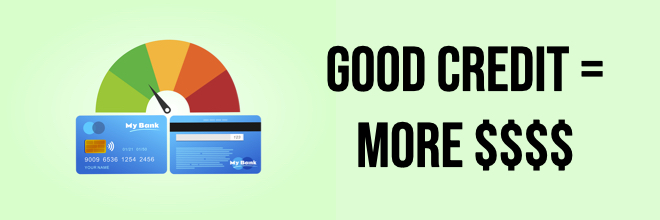
    Good Credit = More $$$$

    Your credit score is one of the most important measures of your financial health! I have found that few advisors have a handle on how to coach their clients to improve their credit scores.

    There are ripple effects to having good or poor credit. The better your score, the easier you will find it to be approved for new loans and or lines of credit. A higher credit score can give you access to the lowest available interest rates when you decide to borrow. Good credit will improve your odds of getting approved for credit cards. There are employers that will run your credit score before deciding on hiring you. In addition, the higher your score, the less money you will pay for auto and homeowners insurance premiums!

    Regardless of your age or current credit situation, it is NEVER too late to improve and/or build your credit. It takes some time, effort, discipline, and in some cases, breaking bad habits. There are niche companies that charge thousands of dollars to help fix your credit. You will not need to hire them if you heed my 10 tips below:

    1.   Review Your Credit Reports: You must start somewhere, so review your current credit reports. This is free and easy to do. You can pull a copy of your credit report from each of the 3 national credit bureaus: Equifax, Experion and TransUnion. This can be done for free once per year at www.AnnualCreditReport.com. To improve your credit, it helps to know what is working against you or in your favor.

    2.   If Possible, Pay Off 100% of Your Balances Every Month:  Carrying over balances from month to month is a costly way of doing business. If this is an issue for you, I suggest enrolling into “auto-pay” online, one credit card at a time, so you can stabilize your finances. Payment history counts for about 35% of your credit score. 

    3.   Correct Inaccurate or Additional Personal Information: Almost 90% of credit reports have your credit or personal information on you that is either inaccurate or dated. 

    4.   Keep Credit Balances Below 30% of “Available Credit:” Credit card balances should be below 30% of your available credit ALL the time! If you need more credit, get another credit line.

    5.   Consolidate Student Loans:  There are banks that have special programs designed to consolidate existing student loans (usually for balances of $100,000 or more) into one loan at a lower interest rate, which can save you $100’s per month from day one.

    6.   Limit Credit Inquiries: You should have a maximum of 7 or less credit inquiries per year. Any more than that can negatively affect your score.

    7.   Consider Adding an Additional Authorized User: This is an excellent way for parents to help young adults start building credit with little effort. The parent adds their child as an eligible user which starts building a history for the youngster. The more years you have credit, the better your score!

    8.   Consider Joining a Local Credit Union: Many Credit Unions have good initial offers for new member-clients and more liberal rules than banks.

    9.   Keep Old Accounts Open and Deal with Delinquencies: Do NOT close old credit cards that you might not be currently using. One of their formulas is to measure the “average age” of all your cards. The older the better.

    10.Use Credit Monitoring to Track Your Progress: Credit monitoring services are an easy way to see and learn how your credit score changes over time. These services can also protect you from identity theft. The best credit monitoring services notify consumers about changes in their credit and the reasons why.


  • 6 Tips to get your 2020 financial house in order

    6 Tips to get your 2020 financial house in order

    Now that we are in the first quarter of 2020 it’s easy to get off track from our goals.  Follow these 6 tips and with a little time and effort your 2020 finances will be more organized and less stressful.

    1. Organize your paperwork: It’s hard to feel in control when you can’t find anything.  Gather all papers, shred duplicates/old statements and put them all in a box or accordion file.
    2. Go Paperless:  I know habits are hard to break.  Wherever possible create electronic files.  See if you can receive e-bills instead of paper.  Use a flash or thumb drive as a back-up and keep it off-premises.
    3. Protect against identity theft: You can request a free copy of your credit report once per year from all 3 credit bureaus.  Go to www.AnnualCreditReport.com
    4. Put your finances on autopilot: Use EFT direct deposit for all checks, pension and social security received.  Set up automatic payments for recurring bills.  It’s easy and will save time going forward.
    5. Create your 2020 tax file: Most people have to scramble to pull together all tax forms etc.  Start now by setting up a 2020 file and stashing forms/receipts etc as needed.
    6. Review your insurance coverage:  Protect your nest egg and your family by regularly reviewing your life, health disability, and long term care insurance.  If this is confusing to you contact us for a 2nd opinion.

    Your financial house needs regular upkeep.  Putting in a little time and organization will decrease clutter and help you focus on your goals and objectives.

  • 6 Tips for your Financial New Year’s Resolution

    6 Tips for your Financial New Year’s Resolution

    Six out of ten American’s will make some type of financial-based new year’s resolution for 2020.  Usually, there’s a triggering event like receiving your December 2020 credit card bill or spousal pressure to name two.  Follow these tips;

    1. Consolidate Financial accounts: Close 1 or 2 existing financial accounts that you are not tracking or have insignificant monies in.  This will save brain space, reduce statement clutter and avoid paying unnecessary fees.
    2. Increase your 401k/employer retirement contributions: Raise your contributions at least another 1% per year minimum.  You won’t feel the difference however over time it can make a major impact when entering retirement.
    3. Develop a budget and/or expense statement: Review credit card, bank, and checkbook statements to get a handle on inflow and outflow of money.  Start using a program like quick books or if old school draft a budget by hand and hang it up where you can see it.  This can cause heavy emotional denial however better now than later.
    4. Set up a system to save systematic money:  Either something informal like putting the $20 you are saving in gas on fill-ups in a jar.  Formal ideas like buying a cash value life insurance policy or setting up an EFT through your bank account.
    5. Protecting your health saves your wealth: We all know about the escalating cost of health insurance and health care in general.  Renew that gym membership, yoga studio or dust off that treadmill in the garage. 
    6. Bring balance to your life: Take that vacation you have been putting off.  The rest and rejuvenation will impact your health.  Statistics show that one who works 46 weeks/year will out produce a 52 week/year worker.

    It will give you something to look forward to and forces one to be very productive before leaving and when returning home.  Use frequent flyer miles if need be.

    You will be amazed by how much better you will feel by following these 6 easy steps!

  • 6 Tips to save $$$ on Holiday Shopping

    6 Tips to save $$$ on Holiday Shopping

    Last year people spent on average $1,000 per child for the holidays.  Heed these tips to avoid out of control spending:

    1. JoinHoney.com: On your iPad, desktop or laptop click www.JoinHoney.com and add the extension.  This extension (not for phones) automatically searches for the best price and attaches coupons, often cheaper than Amazon when you are checking out!
    2. Make a budget: Budget X dollars per person and keep the list with you while shopping.
    3. Points, Points, Points Credit cards, Verizon, AAR, and many other companies offer points to discount prices.
    4. Buy Toys early others late: Statistics show prices are best on Toys early so buy those first and wait on other goods and services.
    5. Search out Free Shipping: This can add up over multiple purchases.
    6. Secret Santa: For Christmas celebrants consider a “secret Santa” where each person is assigned 1 person to buy for instead of buying for everyone. Set a price max and watch your stress levels go down.  My family adopted this strategy years ago after my Mother calculated she was buying 80% of all family gifts.
  • Back to School Shopping- 6 Money-Saving Tips

    For kids, shopping for new gear and supplies may be the coolest part of going back to school. This doesn’t mean you need to “break the bank”. Try these tips to save big money this year.

    1. Make a list then check the house first: Go through all closets, utility drawers and storage areas first. You may already have many items leftover from last year.Unknown

    2. Go to the dollar store next: The next best place to buy items before shopping at more expensive stores.

    3. Shop the big three: Old navy, Gap Kids and the Children’s Place rotate goods often. Ask when they are having sales. Also, if you see an item you bought in the past 14 days later on sale later, you can get the difference refunded as long as you have the receipt.

    4. Hold off buying trendier gear: Wait to see what is in style and buy after the school year starts instead of anticipating trends and wasting cash upgrading later.

    5. Google coupons for on-line purchases: With your list in hand go on-line and search out coupons. You will be surprised at the savings.

    6. Browse craigslist.org: You can find quality things on the cheap and can sell them as well. Just enter your location and click on “baby and kids”.

    Besides saving money on school shopping learn how you may save money on your health or life insurance policies today. Contact Rob for a free review!

  • 6 Tips for your Financial New Year’s Resolution

    6 Tips for your Financial New Year’s Resolution

    Six out of ten American’s will make some type of financial based new year’s resolution for 2019.  Usually, there’s a triggering event like receiving your December 2018 credit card bill or spousal pressure to name two.  Follow these tips:insurance, New York, financial services

    1. Consolidate Financial accounts: Close 1 or 2 existing financial accounts that you are not tracking or have insignificant monies in. This will save brain space, reduce statement clutter and avoid paying unnecessary fees.
    2. Increase your 401k/employer retirement contributions: Raise your contributions 1%/year minimum.  You won’t feel the difference however over time it can make a major impact when entering retirement.
    1. Develop a budget and/or expense statement: Review credit card, bank, and checkbook statements to get a handle on inflow and outflow of money. Start using a program like quick books or if old-school draft a budget by hand and hang it up where you can see it.  This can cause heavy emotional denial, however, better now than later.
    2. Set up a system to save systematic money: Either something informal like putting the $20 you are saving in gas on fill-ups in a jar.  Formal ideas like buying a cash value life insurance policy or setting up an Eft thru your bank account.
    3. Protecting your health saves your wealth: We all know about the escalating cost of health insurance and health care in general. Renew that gym membership, yoga studio or dust off that treadmill in the garage.
    4. Bring balance to your life: Take that vacation you have been putting off. The rest and rejuvenation will impact your health.  Statistics show that one who works 46 weeks/year will out produce a 52 week/year worker. It will give you something to look forward to and forces one to be very productive before leaving and when returning home.  Use frequent flyer miles if need be.

    You will be amazed at how much better you will feel by following these 6 easy steps! Contact Robert here for a free consultation.

  • 5 Things to do on a Budget in New York City

    5 Things to do on a Budget in New York City

    5 things to do on a budget in NYC New York City

    NYC is a great place to visit however it can burn a hold in your wallet

    Check out these options!

    1. Top of the Rock Observation Deck and MOMA (Museum of Modern Art). You can get a combination ticket to visit both for $44 total and can even go on different days.
    2. Museum of Moving Images. in queens just went through a multi-million dollar upgrade with the most collectible from tv/film. Adults $15 and kids get in for $9 ages 3-17.
    3. Coney Island. home of the new Luna park where a 4 hour unlimited wristband can be purchased for $40, fixed date in advance for $29. While there you can see a Brooklyn cyclone baseball game for $20 or less and the aquarium with the new shark exhibit is currently half price $15 for adults, $12 for kids.
    4. Rockaway Beach. Admission is free and parking at Jacob Riis park is

    $10/day and $65 for the summer.  Ride the waves, sunbathe, baseball basketball and various activities are available with no charge.  Hidden gem.

    1. Central Park. entrance is free and there are a variety of things to do or just relax or picnic on the great lawn.

    Contact Robert today for your personal review of your budget, financial plan & financial freedom here today.

  • Three Important Percentages To 
Remember When Buying A Home

    Request a FREE Consultation with the Insurance Doctor Here

    You just finished watching the latest installment of House Hunters on HGTV and begin to think to yourself why not me?   Purchasing your first home is not only the American Dream, for many young Americans it signifies a real transition into financial adulthood and responsibility taking on potentially the largest debt you will ever carry in your entire life.  If you are going to buy a new home, there are three financial rules you should consider before you sign on the dotted line.

    percentage-manThe 20% Rule
    I am a big fan of putting down 20% for two reasons.  One, by saving this 20% it will put you more into a forced habit of what you can save monthly which will likely indicate that you are ready to take on the new mortgage payment coming up with the home purchase.  Two, in most cases, you will avoid paying the Private Mortgage Insurance (PMI) which can make your monthly payment more expensive at the time you purchase the first home.  Far too often, new homebuyers stretch themselves by making a lower down payment, not recognizing how these extra costs will affect them.

    The 10% Rule
    It’s been my experience that when you purchase a new home you will tell yourself that you have your whole life to fix up the home.  However, after you start watching a few more HGTV shows and make a few trips to Home Depot, you’ll find yourself craving to make some renovations or buy some new furniture.  Beyond the down payment you need to save, plan that about 10% of the home value (i.e. a home at $300,000) will cost you an additional $30,000 in home improvements and furniture in the first year.

    The 1% Rule
    Beyond your mortgage payment, you should plan that if the home is valued at $300,000, you should set aside a kiddie of 1% to plan for the unexpected.  I couldn’t tell you today if it will be the roof, the water heater, or the A/C, but invariably there are going to be year to year blow ups that will cost you money from your savings.

  • Six Tips to Save on Dry Cleaning

    Six Tips to Save on Dry Cleaning

    Proctor and gamble did a study in 2008 and found the average woman spends over $1500/year in dry cleaning. Men who wear suits daily would spend more than half that amount. Can these bills be eliminated, probably not. Reduced, for sure!

    1. save on dry cleaningTake off your work clothes and hang them up immediately upon returning home from work. Let clothes “air out” for a few hours before putting them back in a cramped closet.
    2. For men, wear a washable t-shirt under shirts and jackets to prevent perspiration stains.
    3. For semi-wrinkled clothes either use Downy wrinkle releaser or actually hang garments in your bathroom while showering, close the door and let sit for 10 minutes.
    4. Search and clip coupons and choose a dry cleaner who is located close to your home.
    5. Launder versus Dry Clean. Many dress shirts do not require dry cleaning but can be professionally laundered and pressed instead for a reduced price. Check your tags and try laundering items that don’t require special treatment. Your shirts will look just as good.
    6. Travel tip: when on a business trip leave shirts/suits/dresses in the dry cleaning plastic when folding in half to pack. This will reduce most if not all of the wrinkles from movement in flight etc.
  • 7 Smart Money Marriage Tips

    7 Smart Money Marriage Tips

    You just got married, but you may not have realized that your money did as well. One of you is a spender and one is a saver! How in the world will you make it work? Especially now that many people are getting married in their 30’s and 40’s for the first time, what should you be doing money wise? Here are 7 tips on money strategies for your new marriage.

    1. Create Separate Accounts And One Joint Account:

    To mingle or not to mingle your money is one of the most important decisions the two of you need to make regarding your finances. Having your own money that you can spend however you want can lessen arguments about money. We disagree that having separate joint accounts lessens the sense of unity in marriage and shows a lack of trust in one another.insurance, New York, financial planning

    2. Track How You Are Spending Money:

    Tracking your spending is not a way to point fingers at one another as to who is spending what. Tracking your spending is not having someone looking over your shoulder every time you buy something. Tracking your spending is critical to being financially secure. Unless you know where your money is going, it is impossible to set up a budget and set financial goals you are both comfortable with.

    3. Discuss Finances Together On A Regular Basis:

    Sure, talking about money isn’t easy because money can symbolize different things to each partner. One may view money as security and the other as power. If the topic of debt, bills, savings, and goals makes one or both of you uncomfortable or defensive, seek the help of a financial counselor or planner. It is important that both of you know where you stand financially and have common financial goals.

    4. Save 10% of Your Income:

    Couples living month-to-month often rationalize that they just don’t have enough money to save. Make the decision to save at least 10% of your income. After saving enough cash as an emergency fund, invest in a retirement account. The earlier the two of you start saving money for your retirement years, the easier it will be have a retirement lifestyle that you both hope for.

    5. Handle Debt As A Couple:

    Make a plan to pay off existing debt. Drawing a line in the sand and saying that your spouse’s debt isn’t your problem is not going to work because even if the debt existed before you married, your credit rating can be negatively impacted as well as the bottom line of how much money the two of you are paying monthly in interest charges.

    6. Decide On The Bill Paying Strategy:

    Maybe you had a house and your partner had one as well. You were both used to paying your own bills. Now that you are living together and your bills are combined, get clear as a couple on who will pay what bill and which bank account the money is going to come out of each month. This will absolutely
    reduce friction in your relationship over time by having clear expectations.

    7. Don’t Keep Big Financial Secrets:

    Not being honest about the cost of large financial purchases or keeping debts hidden is considered financial infidelity by many people. Such secrets can destroy your marriage.

    THE CONTENT IS DEVELOPED FROM SOURCES BELIEVED TO BE PROVIDING ACCURATE INFORMATION. THE INFORMATION IN THIS MATERIAL IS NOT INTENDED AS TAX OR LEGAL ADVICE. IT MAY NOT BE USED FOR THE PURPOSE OF AVOIDING ANY FEDERAL TAX PENALTIES. PLEASE CONSULT LEGAL OR TAX PROFESSIONALS FOR SPECIFIC INFORMATION REGARDING YOUR INDIVIDUAL SITUATION. THIS MATERIAL WAS DEVELOPED AND PRODUCED BY HELLO MY NAME IS, LLC TO PROVIDE INFORMATION ON A TOPIC THAT MAY BE ON INTEREST. THE OPINIONS EXPRESSED AND MATERIAL PROVIDED ARE FOR GENERAL INFORMATION, AND SHOULD NOT BE CONSIDERED A SOLICITATION FOR THE PURCHASE OR SALE OF ANY SECURITY. COPYRIGHT 2014 HELLO MY NAME IS, LLC