Category: Uncategorized

  • Biden’s Gift to New York!

    Biden’s Gift to New York!

    Last weekend, President Biden’s $1.2T infrastructure bill passed, in a bipartisan Senate and House of Representatives. This bill will have a disproportionately positive benefit for New York and Rockaway in particular!

    There is an old saying, “the squeaky wheel gets the oil,” and this is what is going to happen with New York since we have more infrastructure needs than every other state except California.  If initial estimates hold true, roughly $170B (over 14% of the total) would be earmarked for New York State infrastructure projects.

    The New York Funds Breakdown is as follows:

    1. $12.5B:  For Roads, Highways, Bridge Repair, Electric Vehicle Infrastructure.
    2. $1B: For our 3 Airports:  JFK, $300M, Laguardia, $150M and Long Island MacArthur, $21M.
    3. $58B: For Trains:  $22B for Amtrak Improvements (includes the Gateway Tunnel to NJ Project, $24B for Northeast Corridor Modernization and $12B for Intercity Passenger Rail, including a “High-Speed” Rail! In addition, completion of the 2nd Ave Q-train to 125th st. and installed handicapped-accessible elevators at all stations.
    4. $90B: For Water Infrastructure:  $14.7B for the EPA (Environmental Protection Agency) Drinking Water Revolving Fund (provides grants and loans for projects). $14.7B for the EPA’s Clean Water Revolving Fund (for water quality improvement) and $55.4B in Supplemental Emergency Appropriations. 
    5. $9.8B: For Clean Buses and Mass Transit.  

    While this bill is a “game-changer,” I have mixed feelings about it.  To use an insurance term, it is great to see that both parties can come to somewhat of a consensus by “unbundling” the bill and breaking it off the proposed $2+T “Social Spending” bill.  

    My top 5 benefits to the United States from this bill:

    1. It will create hundreds of thousands of jobs and get people off couches!
    2. This will be a boon to the “Steel Industry!”
    3. Additional Modern Roads Will Increase Trucking Efficiencies and Cut Back on Carbon Emissions!
    4. Increase Domestic job creation!
    5. Drinking Water Quality Will Improve, Which Will Improve American’s Health.  There is a Water Company Called “Heart Water” That Could Solve Our Water Problem if Given the Chance to Scale (keep a lookout for a future column on this).

    As we all know, Rockaway has been devastated by Super Storm Sandy. We have shown our resiliency building Rockaway back better over the past 9 years.  This splurge of money can be used to:

    1. Fix Rockaway’s roads, especially Beach Channel Drive.
    2. Develop Additional Transportation Methods from Rockaway to Manhattan.
    3. Continue Improvements for future storm resiliency.
    4. Create new jobs in Rockaway.
    5. Prices of electric vehicles will come down as auto makers introduce their new EV models.  I predict the 2023-2024 models will be the optimal time to buy electric!  Buying electric and adding charging stations will improve Rockaway’s air quality and reduce carbon emissions.

    The general public might not find It easy to grasp how much $1 Trillion dollars is, as we could have done this while spending less money.  According to www.USDebtClock.org, the current US Deficit sits at $28.8 Trillion or $86,637 per person.  The proposed $3.5T package (not yet passed) would be equivalent to over 12% of our current deficit.

    To give an example how we got ourselves into this deficit situation, look at the Federal deficit progression below:

    President: Debt at Start of Office                       Debt When Leaving Office

    George Washington (1789-1797)                       $82 Million:  211 years later

    William J. Clinton (1993-2001) $4.4T                 $5.8 Trillion

    George W. Bush (2001-2009) $5.8T                  $11.9T

    Barack Obama (2009-2017) $11.9T                   $20.2T

    Donald J. Trump (2017-2021 $20.2T                 $27T

    In summary, this is the largest investment in domestic infrastructure since the 1950s!  It is prudent to spend money on long-term projects with trickle-down effects that will improve this country and our quality of life.

  • Why a 2022 Social Security boost may not be enough

    Why a 2022 Social Security boost may not be enough

    The Social Security Act (SSA) was signed into law by then-President Theodore Roosevelt on August 14th, 1935. In addition to several provisions for the general welfare, the new Act created a social insurance program designed to pay retired workers aged 65 or older, a continuing income after retirement. 

     As per SSA.gov taxes were collected for the first time in January of 1937, and the first one-time lump-sum payments were made that same month. What many people did not know at the time is the average life expectancy in 1935 for men and women was 59.9 and 63.9 respectively. Roosevelt must have figured few people would live long enough to collect.

    Social security is indexed for inflation, which is currently running rampant. It is hard to not notice the prices of goods and services have been rising. Comparing September 2020 to September 2021, for example:

    1.   Gas has increased an average of 42%

    2.   Eggs have gone up 35%

    3.   Bacon had a 28% increase

    4.   Used or Pre-Owned cars are up 24%

    5.   Kids shoes up 12%

    6.   Food on average is up 12% and

    7.   Furniture is up 11% over the last 12 months

    inflation CPI cost of living
    The rapid rise of consumer goods outpaces income for many

    When inflation surges like this, older Americans are the ones who are affected the most. Many seniors are on a fixed income and have their money invested conservatively, such as bank accounts and bank CDs (which I call Certificates of Disappointment!) This time of high inflation and super-low interest rates compounds the problem for many senior retirees.

    The good news is that it was just announced that Social Security recipients are slated to receive a 5.9% cost of living adjustment (known as COLA) in 2022! This benefit increase would be the largest in nearly 4 decades. 

    Based on my 7 examples above, the 5.9% increase will still not be sufficient to offset the skyrocketing increase of goods and services. In addition, there is the federal Social Security tax bite of 50% for individuals earning between $25,000 and $34,000 and 85% for single tax filers earning over $34,000 per year.  For joint tax filers, income between $32,000 and $44,000 would pay a 50% tax on your benefits. Couples earning over $44,000, up to 85% of your benefits may be taxable. Certificates of Deposit (CD’s) compound the issue because the taxable interest they earn (even though you don’t withdraw it) counts against your income.

    Other than repositioning assets and investments, older Americans have few options to increase their cash flow to absorb price hikes outside of returning to work or increasing hours of employment should they still be working. 

    See my tips below on options to help you offset inflation eating away at your purse or wallet:

    1.   Consider Credit Unions or Internet Banks: Both credit unions and internet-only banks will usually pay higher interest rates than brick and mortar banks.

    2.   Consider Transferring CDs to Fixed Annuities: Fixed annuities (issued by insurance companies) help in 3 ways. They typically offer higher interest rates than CDs.  The interest is tax-deferred, which lowers Social Security taxes, and most CD’s allow for a 10% per year no-fee withdrawal. If you withdraw (break) CD money before maturity, you lose ALL of the interest accrued. 

    3.   Consider Selling Your Life Insurance Policy if Not Needed: For older Americans, (especially in poor health) a life insurance settlement could make sense. We have been able to help clients obtain 2-5 times their life insurance cash-values (lump sum with usually no tax) by selling their no longer needed life policy, as well as saving them money they were paying in monthly premiums.

    4.   Consider a Reverse Home Mortgage:  Homeowners could be sitting on an inflation hedge by tapping into their home’s value with a reverse mortgage. This is not for everyone. It is wise to consult with a professional. Homeowners with no mortgage balance could set up monthly payments or a line of credit that can be tapped as needed. Those who are currently making mortgage payments would immediately see a boost in monthly cash flow by refinancing into a reverse mortgage; hence, eliminating their required monthly mortgage loan payments. 

    A great mentor of mine used to say, “the situation is the boss.” Each situation is different. There are other options like series I-savings bonds too numerous to mention. The worst possible decision is to DO NOTHING!

  • FAFSA= Free Money, Get in Line!

    FAFSA= Free Money, Get in Line!

    FAFSA is defined as the Free Application for Federal Student Aid.  October 1st, is when the FAFSA $$$$ floodgates just opened for 2022.   There is much confusion on FAFSA, what it is and how it works.  Sometimes, I think the colleges prefer it that way.  Let me shed some light on the subject. 

    Reasons for your college bound student (and you) to complete their FAFSA this week:

    1. FAFSA is First Come First Serve: There is $150 Billion available RIGHT NOW while coffers are full!
    2. FAFSA is Mandatory: Your student cannot get money without it.  Since it is based on timing not need, why not move to the front of the line?
    3. FAFSA is an Application NOT Financial Aid Itself: Some FAFSA money is FREE money, some must be earned through work-study programs, and some must be repaid.

    College planning can be rewarding AND stressful.  Ignorance with this can be financially devastating.  Over the years, I have seen how mistakes have cost families hundreds of thousands of dollars.  In addition, we have helped students obtain more than $10,000,000 of “FREE ENDOWMENT MONEY” over the years!

    The best money to use for college tuition is “Other People’s Money!”  To explain this, endowment money needs to be defined.  I will do this by example.  My father, Robert Intelisano Sr. (aka The Padrini), attended Fordham University.  When he donates money back to the school, he cuts a check which goes into the Fordham Ram “Endowment Fund.”  This money gets pooled with other alumni donations.  Fordham does NOT have to pay taxes on the receipt, nor interest that this money earns; however, Fordham is required to disseminate a portion of their endowment each year to incoming freshman and current Fordham students. 

    The trick is learning how to extract the FREE endowment money from the school of your choice, instead of relying on work-study and need based aid programs and loans, which must be paid back.  Some endowment money is merit-based and some is need-based. 

    The need-based monies are based on what is called your EFC score.  EFC stands for Expected Family Contribution.  Basically, you complete the FAFSA, tell the government where your money is and how much, then they tell you what you can afford.  Your EFC score is based both on your income and where your assets are.  Anyone who has a student in college knows what I am talking about.  Your EFC is like golf, the lower the score the better.  If my father were applying to Fordham now, he would not be happy to see the annual tuition is over $52,000 per year, and all in, the cost of attendance (including room and board, books, food etc) is over $79,000/year.  If his EFC was $59,000, it would be difficult to get more than $20,000 of merit-based free money (the difference of his EFC score and the cost of attendance).

    Unless you own your own business, it is not feasible to lower your income.  There are ways to lower your EFC by repositioning assets from FAFSA unfriendly assets (bank accounts, mutual funds, CD’s) to FAFSA friendly assets (ones you DO NOT need to mention on the application) such as annuities and cash-value life insurance products

    My firm can help you lower your EFC.  EFC is an annual score so your student can qualify for $4 for every $1 you lower your EFC.

    THE BIGGEST FAFSA MISTAKES TO AVOID ARE:

    1. To Assume You Will Not Qualify: There is a ton of BAD INFORMATION on this topic, and many college counselors are not knowledgeable.  Do NOT assume you make too much money and therefore not complete the application.
    2. Waiting Until 2022 to Apply: This is a BIG MISTAKE, as you will go to the back of the money-line!  It also gives you less time to “appeal,” as you can appeal and ask for additional FREE money later in the process.
    3. Not Visiting Schools AFTER You Are Accepted: More often than not, schools will give you MORE FREE ENDOWMENT MONEY AFTER you visit. 
    4. NOT Considering Speaking to a Professional: A pro can help you navigate these choppy waters. 

    For the DIYers (Do it Yourself) I suggest buying the book by Elizabeth Wissner-Gross called “What High Schools Don’t Tell You” (and other parents don’t want you to know), or go to www.WhatHighSchoolsDontTellYou.com

    For those who are looking for a program or coaching, I suggest Andy Lockwood and Lockwood College Prep.  Their website is www.LockwoodCollegePrep.com and you can see video’s, (short and good) get on their email list and consider hiring them.  For questions, Wave readers can reach out to me at Rob@InsuranceDoctor.us.

    Remember, if your student is now a senior, these financial moves must be made by 12/31/2021, which is when you can NO LONGER make any financial changes so ACT NOW!

  • Vegas Comes to New York!

    Vegas Comes to New York!

    Legal sports betting hit an all-time high during the first week of NFL (National Football League) games last week!  According to Tech Firm Geo Comply Solutions, there were 58.2 million betting transactions between the Thursday September 9th, and Sunday (September 12th) Night Football games.

    Since 2020, legal sports betting transactions have doubled.  Much of this is because of the increase of many states allowing legal sports betting via mobile phone and/or in-person. 

    New York State is losing millions of dollars, mostly to New Jersey and Pennsylvania.  It is not a coincidence that New Jersey, earlier this year, announced a “balanced budget” and made FULL PENSION PAYMENTS for the first time in over 25 years!

    There are 22 states (including New York State which is a few months away from launching mobile phone sports betting) that currently allow legal sports betting. 

    Currently, 9 states (including Connecticut) have passed the law and are in difference stages of implementation.  Fifteen states are in the process of legalizing sports gambling and there are only 2 states (Idaho and Wisconsin) that have not had any publicly announced bills devoted to sports betting legalization. 

    A few interesting legal state scenarios include:

    1. New Jersey: On June 18th 2018, Governor Phil Murphy signed the sports betting bill that had passed the previous week.  Three days later, the William Hill sportsbook took bets at Monmouth Park, where Phil Murphy was first in line to place a bet.  The Borgata in Atlantic City booked sports bets 30 minutes later.  Other sports books have popped up, such as FanDuel’s first sports book at the Meadowlands which opened 1 month later.  New Jersey allows mobile and in-person legal sports betting.
    2. Delaware: On June 5th, 2018, Delaware moved to offer single-game betting on a number of sports at 3 casinos in the state.  Expanded betting can take place at additional locations and on-line. Delaware allows in-person betting only with NO betting on in-state college teams.  There is no betting permitted on games involving in-state college sports teams!
    3. Pennsylvania: The Hollywood Casino at Penn National Race Course booked the first legal sports bets in Pennsylvania in mid-November 2018. 
    4. Washington DC: In June 2020, the D.C. Lottery launched it’s “GameBetDC” platform, allowing consumers “to wager while in the District on major sports worldwide” via computer or mobile device.  The William Hill Sportsbook opened up inside the Capital One Arena in Washington marking the first sportsbook to open inside of a U.S. arena!
    5. New York State: A law was actually passed back in 2013 allowing legal sports betting at 4 on-site locations, all in upstate New York.  As per ESPN.com, the law was revived after a Supreme Court ruling in 2018.

    What does this all mean for New York, you might be asking yourself?  Just like with legalized Marijuana, New York State has “dropped the ball” and lost many millions annually to New Jersey. 

    Since mobile phones are tracked for sports betting, I have read and heard stories of Manhattanites riding their bicycle over the George Washington Bridge to the New Jersey side, placing their bets, then riding back to the New York side.

    Draftkings and FanDuel have early market share and name recognition.  When my Aunt Carol (who is a scholar and dislikes sports) referred to a catchy Draftkings commercial saying “make it rain” 2 years ago, I knew this would be in the mainstream immediately.  The UFC (Ultimate Fighting Championship) allows fans to bet during fights as odds change in between rounds. 

    The downside to legal sports betting in New York State is that gambling is an addiction, and this will only make it worse.  There must be new levels of support, safeguards, and counseling available to the current and new gambling addicts. 

    On the positive side, New York State’s and New York City’s coffers could certainly use the much-needed revenue generated by legalized sports betting.  It could go a long way towards helping to solve the problems such as homelessness, overcrowded jails, climate reform and a crumbling infrastructure.

    What are your opinions on legal sports gambling?  Feel free to email me @ rob@insurancedoctor.us

  • Fall Shopping Tips for Allergy Sufferers

    Fall Shopping Tips for Allergy Sufferers

    The fall is here bringing with it another allergy season!  The USA loses millions of dollars in annual production from employees calling in sick due to allergies.  Many persons (like myself) suffer from adult-onset allergies, while others have been suffering since childhood.

    Did you know that only 8 types of foods account for approximately 90 percent of allergic reactions? 

    As per the CDC (Center for Disease Control and Prevention) the top 8 most highly allergic foods are:

    1. Peanuts
    2. Cow’s Milk
    3. Eggs
    4. Tree Nuts
    5. Fish
    6. Shellfish
    7. Soybeans

    There is no current cure for peanut allergies, the most highly allergic food. The ONLY way to prevent allergic reactions to peanuts is to AVOID ALL FOOD and food products containing peanuts in any form.  Peanuts or peanut products can be disguised on labels as “hydrolyzed vegetable protein,” ground nuts, goober nuts and beer nuts!  Additional foods to avoid include chili, eggrolls, certain Thai dishes such as satay sauce, Chinese food, and macaroons to name a few.

    I suffer from allergies to fragrances, which seem to be in almost everything.  Bathroom and Kitchen products, such as shampoo, hair conditioner, dishwasher fluid, and soaps, as well as candles.   I was forced to change all my household supplies to avoid allergic reactions.

    Heed these 6 shopping tips if you have allergies and/or asthma:

    1. Look for the Asthma & Allergy Friendly Mark: Being selective and attentive to what you purchase can prevent you from creating your own allergic problem.  Look for the AAFA (Asthma and Allergy Foundation of America) mark and go to www.AAFA.org/certified for more information.
    2. Avoid Certain Cleaning Products: Removing allergens at home requires cleaning regularly.  Stay away from fragrances and consider wearing a mask while cleaning.  Detergents like ALL “Free and Clear” have no allergens or fragrances.  Costco’s house brand, Kirkland makes a detergent called “Ultra Clean” that is free and clear of dyes and perfumes!
    3. Buy Breathable Bedding for Better Sleep: We spend almost 1/3 of our lives in bed so it is important to purchase products that will not trigger allergic reactions.  Read labels and consider am “allergen free” mattress cover.
    4. Consider Air Cleaners: Good indoor air quality is critical for everyone in the family!  Read independent testing reports before buying air cleaners and humidifiers.
    5. Use a High-Quality Vacuum:  Cheap vacuums redistribute the allergens during use, and also when changing the cleaning bag.
    6. Gift Toys that Inspire Smiles, not Sniffles: Brain stimulating toys are best for kids.  Try to avoid stuffed animals.  Beware of those stuffed with allergen filled bedding products.

    Label reading is crucial for food, bathroom, kitchen, cleaning, and all products for the home.  The USA does a poor job with labeling and there needs to be an overhaul to the system.  In the meantime, reading labels can prevent getting sick!

  • Pizza = Big Business

    Pizza = Big Business

    Pizza is my favorite food! The passion for pizza goes way back to my early childhood when my Sicilian Grandmother, Anna Intelisano, made her own pizza for us. At our house, for a variety of reasons, we would often have pizza on Friday nights with cannoli for dessert.

    Pizza was invented in Naples, Italy in the early to mid-1800s. The classic Margherita-style pizza was named after the Italian “Queen Margherita!” In celebration of the queen’s visit to Naples in 1889, a popular pizzeria made a pizza to match the white, green, and red of the Italian flag. 

    Pizza became popular in the United States in late 1945, when returning soldiers who fought in Italy in WWII spread the word. The first pizzeria in the USA was Lombardi’s, which opened in 1905. 

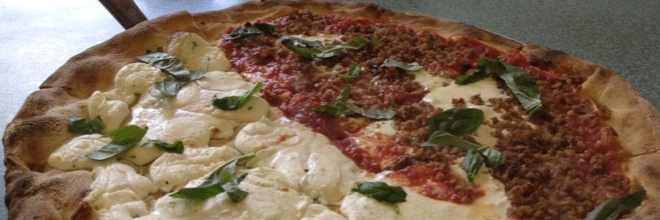
    I led a pizza crawl in October 2019 (see the picture) which started at Famous Ben’s, then onto Prince Street pizza (my #1 pepperoni Sicilian slice,) followed by a fabulous sit-down meal in the Lombardi’s basement dining room. 

    Lombardi’s was founded by Gennaro Lombardi.  His employees included Anthony “Totonno” Pero, John Sasso, and Pasquale “Patsy” Lanceri. The 3 pizza makers left and launched their own pizza establishments called Totonno, John’s, and Patsy’s respectively. Thus, the Lombardi pizza family tree was created! Subsequently, two pizza generations branched out to places like Patsy Grimaldi’s (his nephew) and Lucali. 

    There are now numerous pizza styles such as Detroit-Style (Emmy’s and Emmy Squared,) a new wave of Neopolitan artisanal personal pizza styles such as Roberta’s, Keste, Best and Motorino. With these hybrid styles have come large price increases.

    Food and Wine recently came out with a report ranking New York pizza #3 behind New Jersey and Connecticut. Their reasoning is that New York pizzerias are in a hurry and rush the process to make more profit. I am not buying this; however, I do have a few places in N.J. and Ct. on my radar to do my own comparison.

    I have found excellent pizza all over the world. From Naples (we went to Pizzeria da Michele, featured in the Eat, Pray, Love Julia Roberts movie) to Sydney, Australia to Bogota, Colombia.

    Since the early 1960s, the price of a regular New York slice has almost matched the price of a subway token. This was called the “Pizza Principle” or the “Pizza-Subway Connection.” This held true until about 6-8 years ago when pizza prices started to ramp up and become a huge money-making business. Now, in many places, a gourmet slice with toppings can run between $4-$5 per slice.

               Courtesy of factretriever.com, my top 10 pizza factoids are:

    1.   In America, annual pizza sales exceed $28 billion per year.

    2.   Over 5 billion pizzas are sold every year in the world.

    3.   Over 3 billion pizzas are sold every year in the United States.

    4.   Americans eat approximately 350 slices per second.

    5.   Recently, Halloween unseated Super Bowl Sunday as the biggest pizza day.

    6.   Thanksgiving is the day Americans eat the least amount of pizza.

    7.   October is national pizza month.

    8.   The average American eats about 46 slices or 23 pounds per year.

    9.   The most popular pizza topping in the USA is pepperoni.

    10.Lady Gaga once bought $1,000 worth of pizza for fans waiting in line for her autograph!

  • Snail Mail What’s Going On?

    Snail Mail What’s Going On?

    The USPS (United States Post Office) is and has been facing a financial, service, and public relations crisis the past few years, before current Postmaster Louis DeJoy was appointed to run the Postal Service by its Board of Governors last May 2020. 

    It was an odd hire as Mr. DeJoy, unlike other postmasters, had no USPS experience and had been working in the private sector. Shortly after he started the position, he started imposing cost-cutting measures that many mail carriers had blamed for creating backlogs across the country. 

    I remember reading an article last year that he ordered 1 of the 5 Queens Super-Sorter Machines to cease operations, to reduce mail sorting expenses. Each one of these Super-Sorters can sort over 1,000,000 letters per day. As a business owner in Queens, last year I noticed my mail was taking 1-3 days longer than usual to arrive at their destination.

    As per Forbes and the Washington Post, The FBI (Federal Bureau of Investigation) is investigating Postmaster Louis DeJoy in connection with campaign fundraising activity, allegedly made by employees who worked for him when he was in the private sector.

    After last week’s USPS board meeting, it has become clear that the USPS will be changing its operations starting October 1, 2021. Mr. DeJoy presented a 10-year plan that he says “will reduce expenses by $170 million per year” and improve service by “intentionally” slowing down the delivery of first-class mail from 1-3 days to 1-5 days. It is estimated that 30% of first-class regular mail will take between 4-5 days instead of 1-3 days. This seems counter-intuitive and could change how many of us pay our bills and services. They will stop flying first-class mail and instead transport it by truck. 

    There are pluses and minuses to this strategy, trading time for money. In Arizona and parts of the west coast, driverless trucks are being tested.

    The USPS has been hemorrhaging financially for years and certainly can use a system overhaul as they lost $3 billion in the first quarter of 2021; however, I am not convinced that this is the answer. 

    The question is, what does this all mean to business owners and the “Regular Joe’s” across the country? I have been paying my bills (company and personal) through the internet for many years. There are situations where you receive a bill in the mail which is due in under 2 weeks. I do NOT see companies sending you paper bills 2-3 days earlier to offset these intentional slowdowns; hence, we must make the necessary changes to adjust. See my tips below as to how to save money and combat these changes:

    1.   Move Your Internet Bill Pay up 2-3 Days: For those who already pay online, consider having your mortgage and other important time-sensitive checks arrive on the 28th of the previous month instead of the first.

    2.   Consider Setting Up Auto-Bill-Pay Through the Internet: There are many people whether old-school, technology challenged or those concerned about bank account hacking that still write paper checks.  Some just do not trust the system. A definition of insanity can be “doing the same thing over and over and expecting a different result.” 

    3.   Buy Forever Stamps: The current price for a standard weight rectangular envelope is 55 cents. If you buy forever stamps, when the charges are increased in the future to say 70 cents, the USPS will still accept your 55-cent stamp using the “forever” style stamp hence, saving on inflation.

    4.   Plan Further in Advance When Paying Bills by Mail: If you write out or schedule your online bill pay on the 21st of the month, consider moving the date up to the 17th or 18th. 

    5.   Familiarize Yourself with Standard Priority Mail: If you have important mail that must get there in 1-3 business days, consider using USPS Standard Priority Mail which costs $7.95 and includes tracking. Keep in mind, if you wait until the last minute and your mail needs to be received overnight, the USPS “Priority Express” will set you back a hefty $26.25.

    Regardless of how you pay your bills, it is important to understand, as of October 1, 2021, there will be major changes to how your regular snail-mail is sent so it is best to be prepared! 

  • 6 Ways Olympians Can Earn a Living

    6 Ways Olympians Can Earn a Living

    Now that we are well into the summer, many persons (like myself) are looking forward to next week’s Summer Olympics in Tokyo, Japan, torches will be lit on Friday, July 23rd

    There are and will be many interesting stories, and new stars will be born.  The USA Olympic trials have already had interesting stories, such as Simone Biles’s quest to be the most medaled athlete of all time.   As per The New York Times, the charismatic track and field sprinter Sha’Carri Richardson (the fastest U.S. woman) has been denied a spot on the 100-meter and 200-meter individual races, (and 100-meter relay team) because she smoked marijuana to cope with the death of her biological mother.  The athletes are tested for marijuana, which Sha’Carri was well aware of, and for which she apologized.  How does smoking pot help you run faster?  I would think it would slow you down!

    Since USA professional athletes have been permitted to compete in the Olympics, there has been a misconception that athletes get rich from competing.  In some countries yes, however, in the USA only 50% of our track & field athletes ranked in the top 10 earns over $18,000 per year.  The following are some ways athletes are getting compensated:

    1. The USOC (United States Olympic Committee): Although the USOC takes in millions annually, they only compensate the athletes (based on 2018 data) $37,500 for gold, $22,500 for silver and $15,000 for bronze.  For US Olympians, gold medals come with a heavy tax bill on $38,100 of income per gold medal!  This covers both the $37,500 received plus the value of the actual gold estimated at about $600.
    2. Corporate Sponsorship: United States corporations spend millions sponsoring “the team” which is why athletes are wearing team logos.  In a typical Olympic Games, there are 15,000 athletes competing in 26 sports for only 1,000 medals, so it is difficult to get sponsorships.  This is different from endorsement deals.  Sponsorships (aside from endorsements) are usually the best way to get paid as training is time-consuming and expensive.
    3. Special Funds: USA swimming pulls in over $100 million per year (from fees from 300,000 members) and gives a $3,000 per month stipend only to swimmers who rank in the top 16.  This is called an APA (Athlete Partnership Agreement).  This money is not “Free” as athletes are required to make public appearances, attend charity events and banquets, etc.
    4. Government:  In some countries (like Cuba for example) the government takes care of Olympic medalists for life.  A client of mine does business in Cuba and gave me some inside information.  If the athlete earns a medal (can be a bronze or silver in addition to gold) in any sport, the government takes care of them financially for life.  However, he told me about a Cuban boxer he met who finished 4th and is now flat broke.
    5. Foundations and Private Funding:  In wrestling for example, LivingTheDreamMedalFund.com raises money that pays out $250,000, $50,000, and $25,000 for gold, silver, and bronze medals, respectively.
    6. Large Corporate Partnerships:  Some large US corporations partner with US athletes allowing them to work part-time while training.

    It is clear in the USA that Olympians are doing it for the “love of the sport!”  There is a bill pending that would eliminate taxation on income received by Olympians.  This would greatly benefit the next Michael Phelps, who holds the record for the most medals won by ANY athlete (28) including 23 gold medals and 13 individual golds.   Simone Biles would be happy as well as she holds the gymnastics record with the most World medals (25) and gold medals (19), hopefully with more to come!

    Times are changing in amateur sports, as there was just an NCAA (National Collegiate Athletic Association) rule change (after a unanimous Supreme Court Ruling) this month that the NCAA must provide compensation to athletes for “education-related” expenses, like paid internships and study abroad.  The lines between sports and money are clearly blurred!  One thing we can agree on is Let’s Go U.S.A.!

  • Inflation, The Silent Killer!

    Inflation, The Silent Killer!

    The Google definition of inflation is: “A general increase in prices and fall in the purchasing value of money over time.  Inflation can occur when prices rise due to increases in production costs, such as raw materials and wages.  A surge in demand for products and services can cause inflation as consumers are willing to pay more for the product.”

    An example of inflation is the cost to cross the Marine Parkway-Gil Hodges Memorial Bridge.  When the bridge opened on July 3rd, 1937, the cost to cross the bridge was between 10-15 cents, depending on the type of vehicle.  The current cost is $5.09 by mail and $2.45 by E-Z Pass. 

    The Federal Reserve wants to keep inflation under the 2% benchmark.  Right now, inflation is running around 3% which is in the danger zone.  As per Barron’s, the FOMC (Federal Open Market Committee) released minutes from its June monetary policy meeting.  Fed officials signaled that interest rates would rise sooner and faster than Wall Street expected prior to the meeting, as inflation is rising at its fastest pace since 2008.

    What does this all mean?  This means that if you are on a fixed income, your money will not go as far during inflationary times.  This also means, if you have investments and/or money in the bank that is “netting after-tax” less than 3%, you are losing money (purchasing power).  These are important barometers that few people are paying attention to right now.

    People have been couped up (myself included) during the height of Covid-19 and many persons now have more spendable income.   A combination of inflation, the Suez Canal blockage, and higher demand for travel has skyrocketed travel costs in the past month.  Hotel costs in Miami Beach have risen 50% since the last week in June.  Rental cars are up 110% this year and are 70% higher since the pre-pandemic in 2019.  Oil prices could soon hit $100/barrel, which will also spike gas prices.

    There are options where one can position assets to fight inflation or at least break even, as interest rates are likely to rise over the next 12-18 months.  I have seen banks that are paying anywhere from .10% to .50% interest.

    Every situation is different, depending on one’s risk tolerance.  Some suggestions below can help you offset inflation’s eating away at your purse or wallet:

    1. Shop Your Bank Account rates: Take a look at your most recent bank statement.  The internet makes it much easier to shop interest rates and there are virtual banks (meaning they have no brick-and-mortar locations) that will pay a higher interest rate.
    2. Consider Credit Unions for Emergency Funds: Credit Unions will usually pay a higher interest rate than your typical bank.  For example, the Italo-American credit union is currently paying .75%.
    3. Fixed Interest Annuities vs CDs: Many conservative investors still have large sums sitting in CDs (Certificates of Deposit).  CDs can also stand for Certificates of Disappointment!  CDs are taxable (even if you do NOT withdraw funds).  If you have a CD earning 3% and you are in the 30% tax bracket, you are netting 2.1% after-tax.  A fixed annuity paying 3% is tax deferred (the same 30% tax bracket person is netting a taxable equivalent of 3.9%).  Many people are unaware that Fixed Annuities are protected by New York State up to $500,000, whereas banks are protected by FDIC (Federal Deposit Insurance Corporation) up to $250,000.  Insurance companies will usually offer higher interest rates.
    4. The Stock Market: Obviously, stock market returns can exceed inflation; however, there is the risk of loss that options 1,2,3,5 and 6 do not have. 
    5. Cash-Value Whole Life Insurance: Money that is inside your cash-value life insurance usually sits in the insurance company’s general account.  Many insurance carriers are still paying in the 4% range.
    6. Consider Buying Series I-Savings Bonds: The I stands for “Inflation” bonds.  These bonds may be purchased (up to $10,000) online by opening a Treasury Direct account.  The Treasury Direct account is linked to your personal checking account, and you can transfer up to $10,000 at a time.  Currently, Series I-Savings Bonds are netting 3.54%.  There is no risk of loss with these bonds.

    To summarize, these are important times to huddle with your advisors and make sure your money is working for you instead of being eroded by inflation!

  • Summer Camp = Big Dollars!

    Summer Camp = Big Dollars!

    For many sleepaway and day camps, this past Monday was opening day for the summer of 2021!  After 15 months of Covid-19, many kids will be happy to spend extended time out of the house and away from their parents.  For parents, absence makes the heart grow fonder.

    After we dropped off my nephew at basketball camp last Sunday, I started thinking about how big of a business camp has become.  Last year, many parents decided to skip sending their children to camp, and this year, demand has increased more than supply, especially for the higher-end camps.

    As a kid, you never think about how much your parents are paying for the camp you attend.  For this column, I decided to dig in deep and call my client and friend, Ken Barer.   Ken (KB) is the Athletic Director and part-owner of Camp Mohawk, a high-end day camp in White Plains for children ages 3-13.  Ken played Pro Basketball in France and is the former Men’s Basketball Head Coach at Umass Lowell.

    Early in the conversation, I learned that summer camps have come a long way since I went to (KSA) Kutcher’s Sports Academy many moons ago.  Back then, many of my friends went to Camp Anawana.

    It is clear to me that Camp Mohawk is different from the regular day camp.  Most of their counselors (known as Group Leaders) are teachers, some have been with the camp for as long as 30 years. 

    Each Group Leader gets a tablet, and they post daily pictures and a summary of what their campers accomplished that day.  The parents can download the Camp Mohawk app and can access the pictures as well as message the group leaders.  They can also request play dates for their children and request an introduction to other parents through the app. 

    Camp Mohawk is considered a full-service, general day camp and one of the “Big-5” of high-end camps.  Last year, due to Covid restrictions, they hosted 600 campers.  They are proud to say they had zero positive Covid tests last summer!  This year they will host approximately 800 campers, about 100 below normalcy. They have a staff of over 300 persons.   They have an acceptance process that includes an interview and a guided tour of their sprawling 45-acre campus. 

    Mohawk runs a full 8-week summer session and offers 6-week and 4-week options.  Camp Mohawk charges $10,000 for the full summer 8-week session for the first child.  They offer sibling discounts for the 2nd and 3rd child, and the 4th child is free!  Mohawk had a waiting list for this summer, and they suggest applying now for the summer of 2022.

    The pricing includes transportation, (they have bus pickup spots in Manhattan and Brooklyn) a snack in the morning and in the afternoon, a full lunch, 2 daily swimming sessions (instruction in the morning and free period in the afternoon) towels and daily bathing-suit laundering.  Their day runs from 9a-4p daily.

    In addition to traditional sports like basketball, their campus features:

    1. 8 Heated Pools
    2. A Farm with Animals, such as Alpacas
    3. 2 Wiffleball Stadiums, built like Yankee Stadium and Citi Field
    4. A Mountain Bike Course
    5. Zip Lining
    6. 3 Climbing Walls
    7. A Waterslide
    8. A Hydro Blast Water Balloon Launcher

    Covid-19 protocols include $20,000 of hand sanitizer and sink hand-washing stations across the campus and daily health and temperature checks that are logged online.  For more information go to CampMohawk.com.

    My takeaways are that I would like to wind the clock back to be a 10-year-old and go to Camp Mohawk for the next 3 summers.  Summer camp can be expensive and should be budgeted for.  To the kids who have suffered due to no fault of their own, have a fantastic summer!