Month: March 2023

  • Summer Camps, “It’s Getting Late, Early!”

    Summer Camps, “It’s Getting Late, Early!”

    Since it is now Springtime and baseball season has commenced, I will quote the great Yogi Berra. If you are planning on sending your child(ren) to summer camp this year, “it’s getting late, early!”

    Summer Camps have been around for over 100 years! I have fond memories of growing up in Rockaway and loving the beach in the summer. We had a Belle Harbor beach house (now in the Atlantic Ocean) and people visited us from near and far. Because we didn’t want to leave the beach and our friends, we often decided to go to Summer Camp for 1 month instead of the whole summer. I remember going to basketball camp at KSA (Kutcher’s Sports Academy) and hanging out with my friends at the more social Kutcher’s Camp Anawana, across the lake. There is no doubt some of the best friendships in life begin at camp!  

    I reached out and interviewed my longtime friend Ken Barer (KB), Co-owner of Mohawk Day Camp in White Plains, to get the scoop on what’s going on with camp this year. It turns out he was in France, showing his daughter around town, from when he played pro basketball there. We spoke via WhatsApp. You have got to Love technology as we used to buy “phone cards” to call long distances outside the USA back in our summer camp days. 

    KB said, “We are 100% full and we filled up the earliest in our history. I think there was plenty of isolation and pent-up anxieties during Covid-19, and kids are really looking forward to reconnecting and relearning how to socialize, and camp is the best place to do it!” 

    KB then sent me a link to a New York Post column from February about a mother whose child received a “Camp Rejection Letter” from a Poconos summer camp that her 8-year-old was really looking forward to attending.  The letter said, “due to unexpected and unprecedented demand, we, unfortunately, cannot offer your child a bunk spot.” This was after she had promised her daughter, she was going to camp where 5 of her friends were attending.

    In order to prevent this from happening to your child(ren), see below for tips on how to begin your summer camp search:

    1.   Do NOT Wait: If you have plans for your child(ren) to attend a summer camp this year, it’s time to get on it and take action now!

    2.   Assess Your Child First: It’s important to have a handle on your child before matching them up with a camp. Ask yourself the following questions.  Are they introverted or extroverted? Better in small or large group settings? Do they enjoy sports or perhaps theatre and the arts? Any special meal or diet considerations? Day camp or sleepaway?

    3.   Word of Mouth: Ask friends and parents of your child’s friends where they are going and why.

    4.   Talk to the Camp Leaders and Director: Even a year early is not too early to reach out to the camp leaders as it is important to have a working relationship with those in charge.

    5.   Search Online: Checking out a camp’s website and social media reviews is a good place to start. A website for New York City, Long Island, and Westchester Camp Fairs is www.NewYorkFamily.com/camp-fairs. 

    6.   Camp Fairs: At Camp Fairs, families can walk around from table to table to make apples-to-apples comparisons. It is a good idea to have pre-written questions, and Camp Fairs allow for the efficiency of meeting multiple camp directors on the same day.

    7.   Camp Open Houses: Many day camps and overnight camps offer open houses in the spring and fall so families can have a chance to visit the camp ahead of making important decisions. During the open house, the camp will usually run activities for families giving them a chance to walk around and get a “vibe” from the camp. Similar to college campuses, sometimes there is a “feel” on the campus if it is going to be a good fit or not a good fit, so seeing the actual campus is critical.

    8.   Call the American Camp Association, New York and New Jersey: The NY and NJ ACA, offers parents “free services” including one on one advice to help your search. The contact person is Renee Flax at 212-391-5208 or email her at Renee@acanynj.org. 

    There is no question that doing the proper research to find the best fit for your child(ren) can pay off in the long run! There are camps for everyone and it’s important to choose one that has the activities your camper is looking for, as well as a camp you can be excited about. 

    In my experience, Camp allows children to discover who they are and uncover things they might be good at and are interested in. For me, I took up water skiing using “trick water skis,” which was pretty cool when we put on a show for the parents at Parent/Child weekend. Finding the right activities is also a good self-confidence builder and teaches campers teamwork and how to interact with kids from different backgrounds and nationalities. Other benefits of camp are it teaches independence and living in the moment and it helps develop relationships that could be lifelong. 

    Wishing you and your campers the best for a fantastic summer of fun and personal growth!

  • Every Day is Christmas in Antarctica!

    Every Day is Christmas in Antarctica!

    It was a much-needed 3 weeks off to disconnect and see Antarctica, the 7th of 7 continents that I had visited.  Did you miss me? 

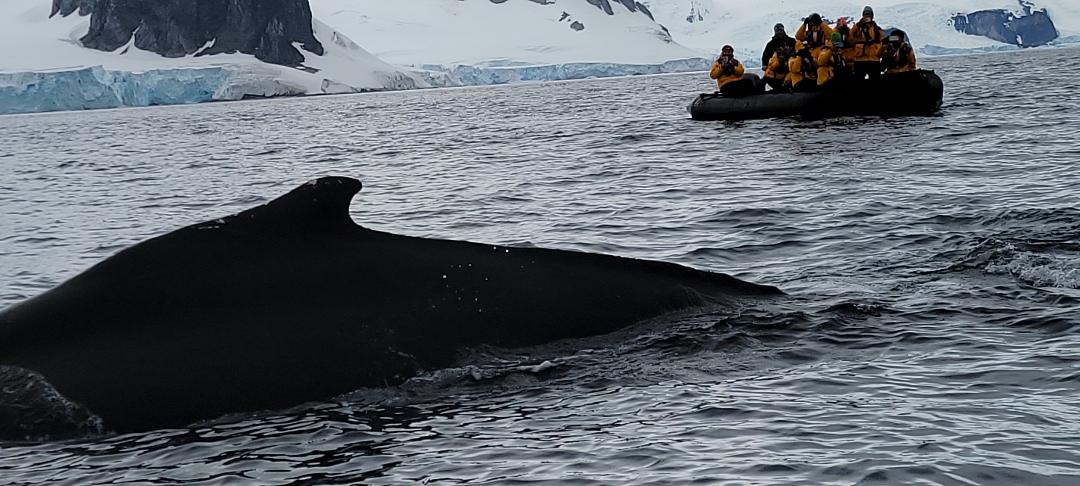
    This was a once-in-a-lifetime trip!  The reason I chose this title is that we were on these small rubber Zodiac boats (originally made for the military) and it was a scramble to take photos.  Upon our return to the cabin, we got to see how the pictures turned out,  kind of like unwrapping holiday presents.

    Antarctica is made up of the 7th continent and the region surrounding it.  The continent of Antarctica is the land mass at the bottom of the globe, right below the southern tips of South America (Cape Horn), Africa (Cape Town), and New Zealand.  It contains the geographic South Pole, is surrounded by the Southern (or Antarctic) Ocean, and is the coldest, driest, and windiest continent on earth! 

    The Southern Ocean has the roughest waters in the world called “The Drake Passage,” named after 16th-century English explorer Francis Drake.  The waters are rough because there is no land mass to break the waves.  They call it “The Drake Shake.”

    It took a total of 4 days to get there from JFK airport.  First, it was an 11-hour flight to Buenos Aires, Argentina.  The was followed by a 3.5-hour flight to Ushuaia, the southernmost city in the world.  Then it was a tough two days on board the Quark Expedition ship to get to Antarctica, the promised land!

    Antarctica is massive.  It measures 14.2 million square kilometers (5.5 million square miles) which makes it the size of the USA and Mexico combined.  It is twice the size of Australia.

    The Arctic is the area at the top of the globe where the North Pole is whilst Antarctica is at the bottom, in the south.  The other difference between the two is although both are vast areas of the ice, there is no land in the Arctic, it is all just frozen sea, while Antarctica has land beneath the ice.

    According to NASA, Antarctica has 90% of ALL the ice on Earth!  Known as “The White Continent,” in some areas the ice is 3 miles thick.  If it all melted, worldwide sea levels would rise by approximately 230 feet, which would wipe out humanity!

    No country owns Antarctica because it has no native population, so nobody has had a historic claim to it.  It is uninhabitable year-round as we checked the temperature in September, and it was negative 57 degrees Fahrenheit.  Their seasons are the opposite of ours, so this is the end of their summer.  It is the most unique continent as it has no cities, towns, roads, building,s or commercial industries.  The only buildings or settlements on the continent are the 70 scientific research bases belonging to 30 different countries.  Many of those are only accessible by plane or by long motor convoy journeys across the ice. 

    There is no doubt this was a trip of a lifetime for me!  We had daily briefings from a marine biologist, ornithologist (bird expert), geologist, and historian and briefings and daily recaps from Shane, the expedition leader.  It was like going back to college combined with a mind-blowing excursion. 

    The first question I am asked is, did you do the Polar Plunge?  Yes, I survived “The Polar Plunge” in 31-degree water!  I learned that salt water freezes at 28.4 degrees Fahrenheit.  They put a wet harness around us, and we jumped into the frigid water.  My feet immediately went numb and I had to look down to see if I was standing on the ship’s metal stairs because I couldn’t feel anything.  On the way up the stairs, they give you a “Polar Plunge” patch, throw a towel around you, and a double shot of vodka before it is time for a hot shower.  There is something about this and the spas’ ice baths because that night was the best I had felt all trip.  This was a physically and mentally taxing journey, not for everyone.

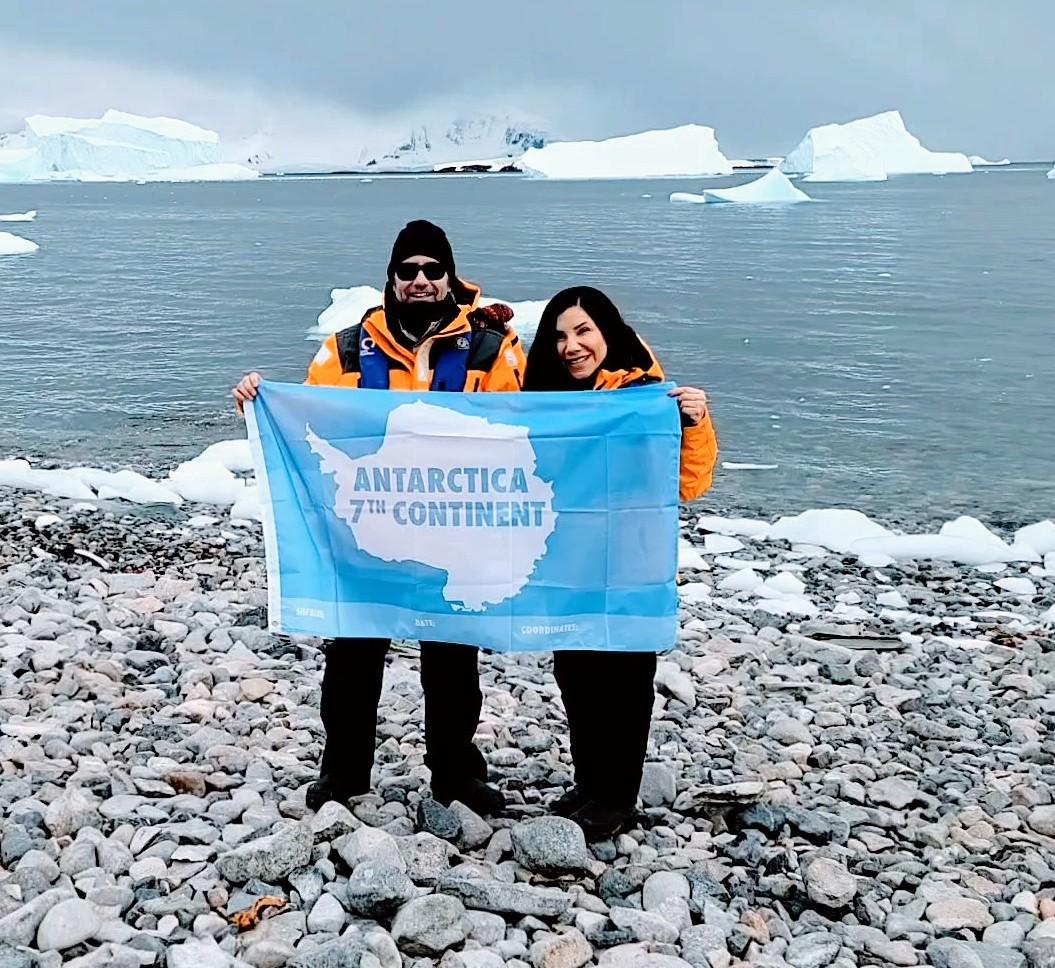
    Before this trip, I thought I had a decent knowledge of travel; however, this was next level.  I went on this expedition with long-time Rockaway resident and fellow adventurer, Josephine Romano (pictured).  Fortunately (for me) she had been an aspiring travel agent; however, she smartly chose the stability of the court system over the volatility of being a travel agent.

    I learned the following ways to save money from Josephine:

    1. Plan in Advance: There are many deals to be had if one does extensive research well in advance.  We started planning this trip in 2021 when Covid-19 was going strong. 
    2. Shop Travel Agents:  We interviewed several high-end travel agents and Josephine found one who got us the best deal and she threw in $150 of ship store credits each. 
    3. Shop International Trip Health Insurance:  As an “Insurance Advisor,” my job is to assess risk and find the best value for my clients and transfer the bulk of that risk to an insurance company.  This is no different and she found the best deal for under $400 each.  This is the first time I had bought the coverage and it gave me peace of mind as there are no hospitals in Antarctica, and they must air lift you out of there if and when something serious happens.
    4. Use Frequent Flyer Miles:  Most airlines have changed their programs making miles less valuable.  This is the opposite of the first two years of Covid as they made qualifying for “Gold Status” easier because fewer persons were traveling.  I used a chunk of miles to save $2,500 for premium economy flights from JFK to Buenos Aires, the first of 3 legs and 4 days needed to get there.  If you have an iPhone, www.thepointsguy.com you can download their app and they convert miles to dollar values. 
    5. Do NOT Exchange Currency at JFK: They were offering 152 Argentine pesos per U.S. Dollar.  We found 320 for $1 at the Buenos Aires hotel the next day.
    6. Call Josephine Romano:  If all else fails, call Jo!

    I am not sure where to go from here as this was the apex of travel.  If you have any travel venue suggestions, feel free to email me at Rob@InsuranceDoctor.us.